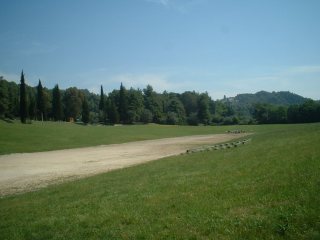
Mycenae
Mycenae, dominating the Argolid plain, was one of the main centres of the Mycenaean civilization at the end of the Bronze Age. Its citadel preserves Cyclopean walls, the Lion Gate, a palace, royal tombs and religious remains. Associated in mythology with Agamemnon, it is one of the major archaeological sites in Greece.
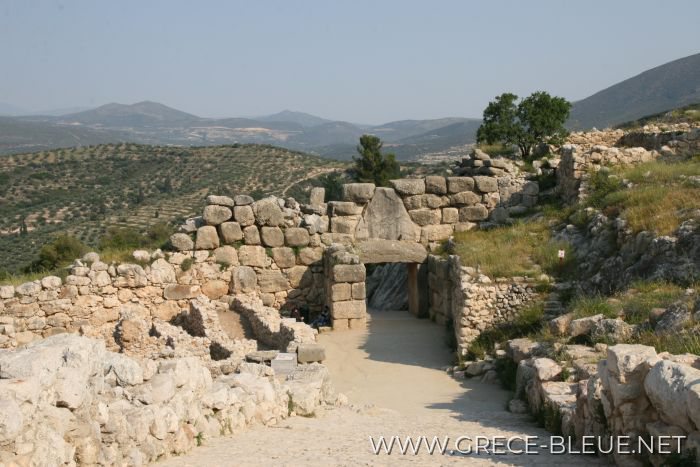
Mycenae, the great citadel of the Achaean kings
Dominating the Argolid plain from a rocky spur, Mycenae was one of the main palatial centres of Greece at the end of the Bronze Age and gave its name to the Mycenaean civilization. Occupied since the Neolithic, the site took on new importance around 1700-1600 BC, when the first elites emerged, as evidenced by the rich tombs in the funerary circles. The citadel reached its peak in the 14th and 13th centuries BC: palace, monumental fortifications, sanctuaries and large tombs expressed the power of a kingdom integrated into vast Mediterranean exchange networks. After the destructions of the late 13th century, the palatial system declined before the site was abandoned around 1100 BC. Mycenae and Tiryns were jointly inscribed as a UNESCO World Heritage Site in 1999.
History and excavations of Mycenae
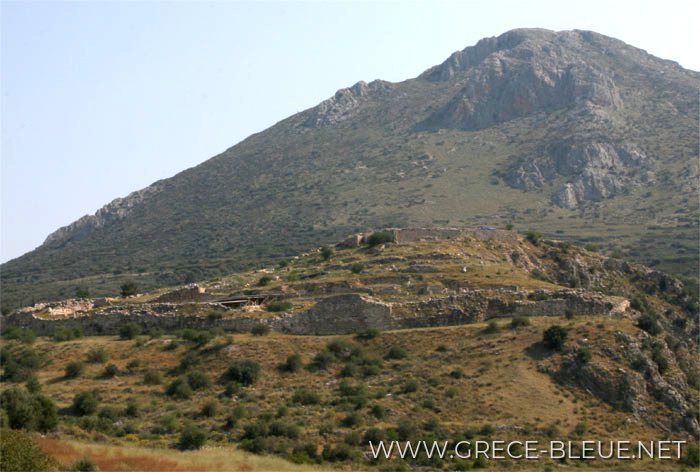
View of Mycenae
After the disappearance of the Mycenaean kingdom, the site was never completely forgotten. The fortifications remained visible and Pausanias still described Mycenae in the 2nd century AD. After the independence of Greece, the archaeologist Kyriakos Pittakis cleared the Lion Gate in 1841. In 1876, Heinrich Schliemann undertook the excavation of funerary circle A and unearthed five shaft graves containing exceptional grave goods: gold masks and ornaments, weapons, jewellery, cups and prestige objects. Panagiotis Stamatakis continued the work and cleared the sixth tomb. Subsequent research gradually revealed the palace, the necropolises, the residential quarters and the religious centre.
Among the discoveries of 1876 is the famous ‘Mask of Agamemnon’, now kept in the National Archaeological Museum of Athens. The object, however, dates to the 16th century BC and thus predates by several centuries the period traditionally associated with the Trojan War. The tombs and their extraordinary grave goods above all bear witness to the wealth of a Mycenaean aristocracy already heavily involved in exchanges across the Aegean and Mediterranean world.
Archaeological site of Mycenae, tour and museum
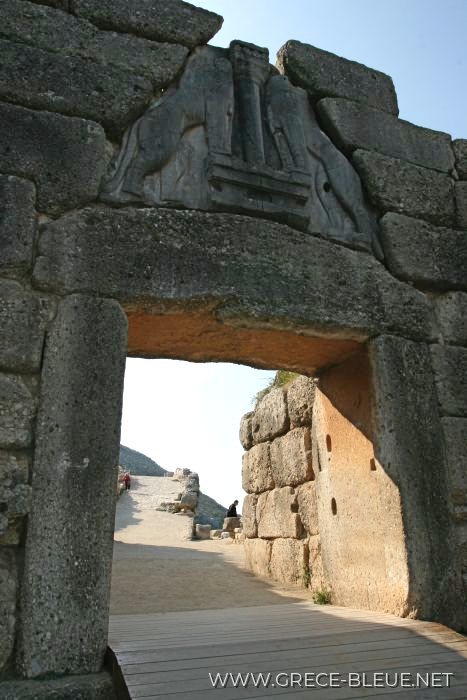
Lion Gate
The visit begins at the foot of the citadel, whose enormous Cyclopean walls follow the rocky relief. Built in several phases from the 14th century BC, they are made of blocks so massive that the Greeks of later centuries attributed their construction to the Cyclopes. The impression of a fortress is reinforced by the strategic location of Mycenae, which dominates the plain of Argos and controlled the routes linking the interior of the Argolid to the gulf.
The main entrance is through the famous Lion Gate, built in the 13th century BC between two powerful bastions. A gigantic lintel supports a relieving triangle in which two rearing felines flank a column. This monumental relief, probably linked to the assertion of royal power, is one of the most remarkable examples of Mycenaean monumental sculpture and remains the emblem of the site.
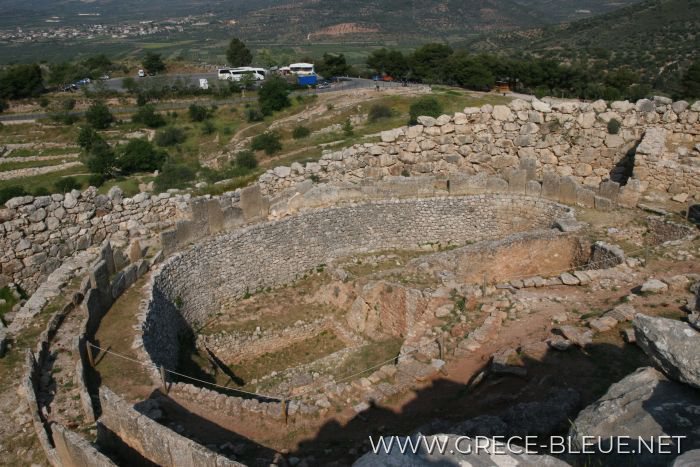
Grave Circle A
Immediately after the gate appears funerary circle A. Its six shaft graves predate the great fortifications and were incorporated into the citadel during its enlargement in the 13th century BC, probably in connection with ancestor worship. It was in this complex that the gold objects discovered by Schliemann and Stamatakis were found, most of which are now exhibited in Athens.
The route then climbs between the remains of houses, workshops and religious spaces. On the south-western slope lay the cult centre, composed of several sacred buildings. Higher up, at the top of the acropolis, the palace occupied a series of terraces dominating the landscape. Its heart was the megaron, a large official hall organised around a central hearth and preceded by a vestibule and a portico. The walls often survive only to a low height, but their plan still allows us to understand the general organisation of the political, administrative and religious centre of the city.
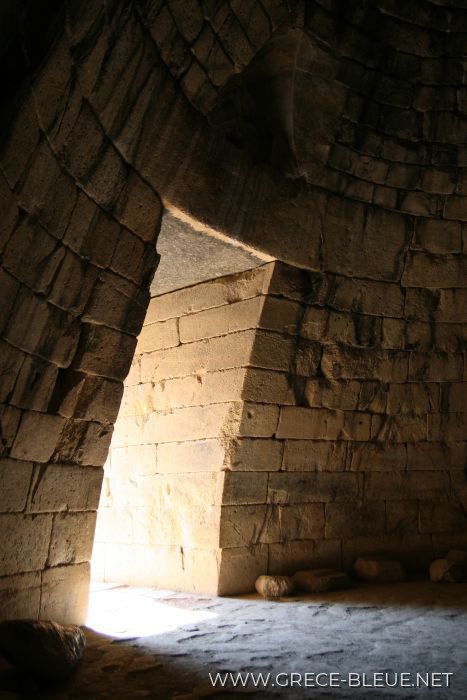
Tomb of Clytemnestra
At the north-eastern end of the circuit wall, a corridor and a corbelled staircase descend to an underground cistern located about eighteen metres below ground level. Integrated into the last extension of the fortifications around 1200 BC, this system allowed the inhabitants to access a spring outside the walls while remaining protected in case of siege. Nearby opens the North Gate, smaller than the Lion Gate but built on a comparable principle.
The city extended far beyond the acropolis. To the west is funerary circle B, older than circle A, as well as several houses and workshops belonging to the settlement established at the foot of the fortress. Around Mycenae, nine monumental tholos tombs have also been discovered, preceded by a long corridor or dromos. They allow us to trace the development of an increasingly monumental funerary architecture intended for the elites.
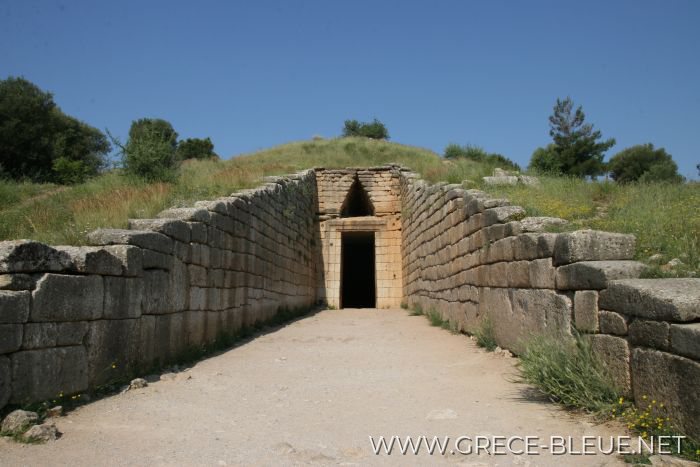
Treasury of Atreus
The most impressive is the Treasury of Atreus, traditionally called the ‘Tomb of Agamemnon’ although no evidence allows it to be associated with the legendary king. Its long dromos leads to a monumental entrance topped by enormous blocks, then to a vast circular chamber covered by a high corbelled vault. The so-called tombs of Clytemnestra, Aegisthus and the Lions illustrate other stages in the evolution of this funerary architecture.
The Archaeological Museum of Mycenae, located directly on the site, completes the tour with objects from the acropolis, the necropolises and the settlement: ceramics, figurines, seals and objects related to daily life, beliefs and funerary practices. The most famous gold pieces discovered in circle A are, however, kept in the National Archaeological Museum of Athens. A visit to the museum thus allows the fortifications, tombs and often levelled remains of the palace to be placed in their historical and human context.
Gallery
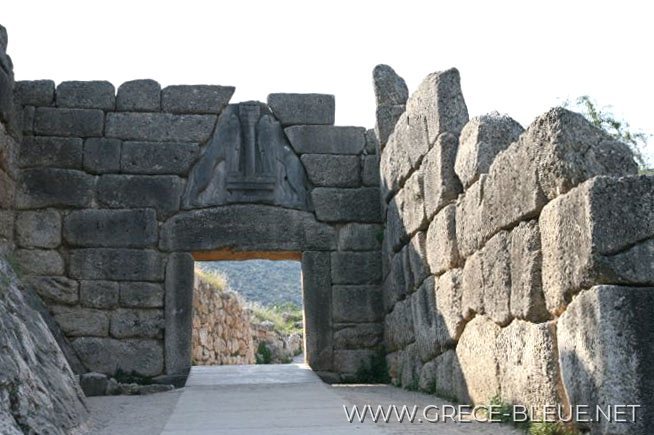
Lion Gate
Tomb of Clytemnestra
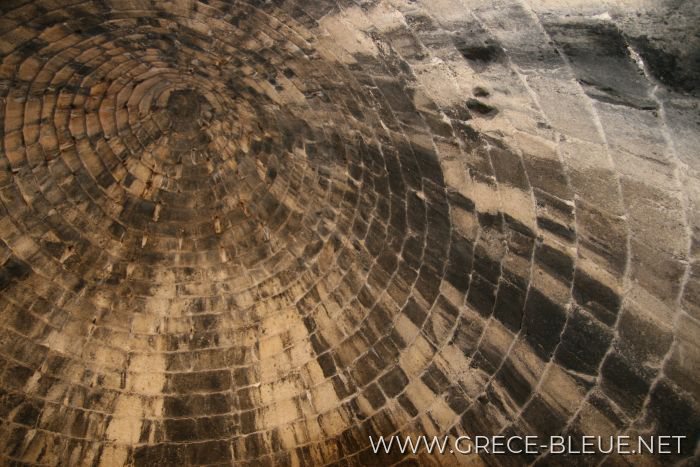
Tomb of Clytemnestra
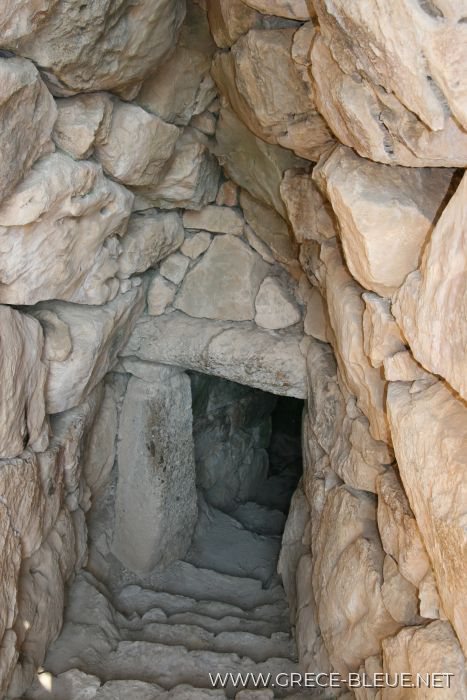
A cistern
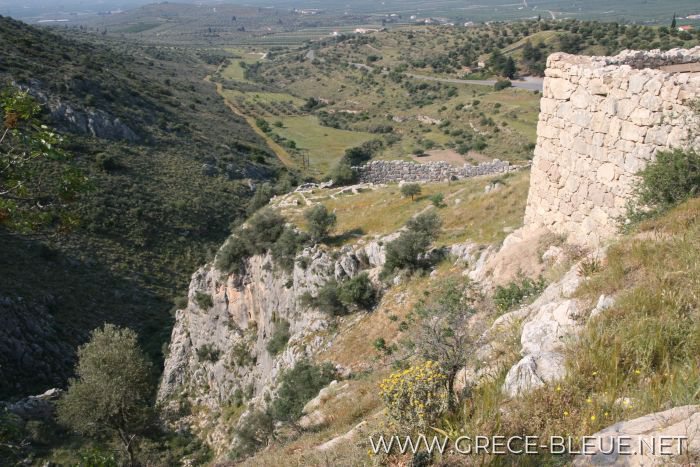
Mycenae
Lion Gate
Treasury of Atreus
Grave Circle A
Sources and information
Sources: Ephorate of Antiquities of Argolida – Acropolis of Mycenae ; Greek Ministry of Culture – Archaeological Site of Mycenae ; Directorate of Archaeological Museums of Greece – Archaeological Museum of Mycenae ; UNESCO – Archaeological Sites of Mycenae and Tiryns.
Map and route
Nearby places to stay
On the same theme