Argos and its surroundings
Ancient city of the Peloponnese, renowned for its vast theatre, its Larissa fortress and its surroundings: the Heraion sanctuary and the prehistoric site of Lerna.
Argos and its surroundings: ancient city, Heraion and Lerna
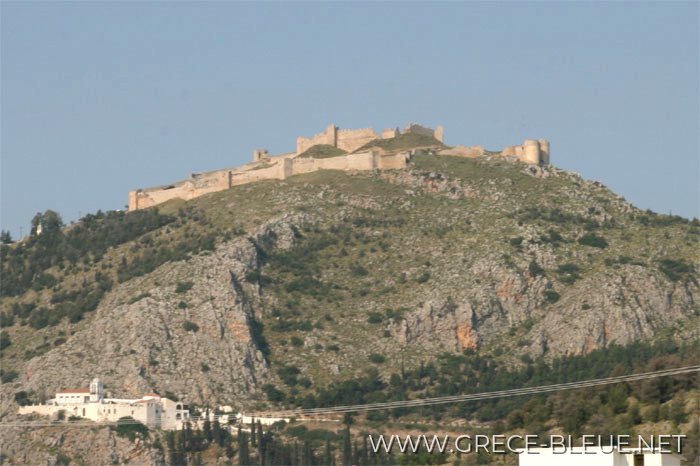
Larissa Fortress in Argos
In the heart of the great plain that bears its name, Argos is one of the oldest and most important cities of the ancient Peloponnese. Less spectacular at first glance than Mycenae or Epidaurus, the city nevertheless preserves a remarkable archaeological ensemble: one of the largest theatres in the Greek world, a vast agora, Roman baths and, above the city, the Larissa fortress. Its surroundings also lead to two major but very different sites, the Heraion of Argos and the prehistoric site of Lerna.
Argos, a city several millennia old
Argos occupied a privileged position in the centre of a fertile plain, between the mountains and the Argolic Gulf. The city appears very early in Greek traditions and remains linked to the dynasties and heroes of Argive mythology, notably Danaus, Perseus and Diomedes. It was later one of the great powers of the Peloponnese, long a rival of Sparta.
Its most impressive monument is the ancient theatre★, built at the beginning of the 3rd century BC against the slope of the Larissa hill. Largely cut directly into the rock, it could hold nearly 20,000 spectators, which places it among the largest theatres in Greece. It hosted in particular the dramatic and musical competitions associated with the Nemean Games and the festivals of Hera.
The Romans then profoundly transformed the monument to adapt it to new shows. Not far away developed the agora, the political and commercial heart of the city, as well as an important complex of Roman baths. The scattered remains thus make it possible to read several phases of the history of Argos, from the classical Greek city to the monumental town of the imperial period.The Larissa fortress above the plain
To the north-west of the city, the Larissa hill★ dominates Argos from a height of some 289 metres. Its position was used for defensive purposes from prehistoric times and continued to play a military role during Antiquity, the Middle Ages and up to the Greek War of Independence.
The fortress visible today is mainly the result of Byzantine, Frankish, Venetian and Ottoman transformations. More than by the abundance of its preserved structures, it is worth visiting for the reading of its successive walls and above all for the panorama over Argos and the whole Argive plain, which makes it possible to understand the strategic position of the city.
Heraion of Argos and Lerna
About eight kilometres from Argos, the Heraion★ was the official religious centre of the city. Set on terraces at the foot of the mountains bordering the plain, this great sanctuary was dedicated to Hera, protectress of Argos. A procession linked the city to the sanctuary during the great festivals organised in honour of the goddess.
The oldest monumental temple was destroyed by fire in 423 BC and replaced shortly afterwards by a new Doric building. In its cella stood a prestigious chryselephantine statue of Hera made by Polyclitus, one of the greatest Greek sculptors of the classical period. The terraces, stairways, porticoes and remains of the temples still make perceptible the organisation of the sanctuary and its importance in the religious landscape of the Argolid.
To the south-west of the plain, near the village of Myloi, Lerna★ refers to a much older era. The site was occupied for about five millennia, from the Neolithic to the Mycenaean period, and constitutes one of the main prehistoric sites of Greece.
Its most remarkable monument is the House of the Tiles, a vast two-storey building constructed in the 3rd millennium BC, during the Early Helladic period. The numerous seal impressions found in the building suggest an already complex administrative organisation. After its destruction, its ruins were covered by a tumulus, perhaps in order to preserve the memory of the building.
Lerna also belongs to the Greek mythological landscape: tradition placed the lair of the Lernaean Hydra, a many-headed monster slain by Heracles during his second labour, in its marshes and springs. The contrast between this tale and the real importance of the prehistoric site makes it one of the most singular stops around Argos.
Other sites around Argos
To explore further, the Aspida hill preserves traces of prehistoric occupation and ancient sanctuaries. Further south, Kefalari combines springs and a prehistoric cave, while at Elliniko stands the enigmatic monument commonly called the "pyramid of Hellinikon". These sites remain secondary compared with Argos, the Heraion and Lerna, but allow a day devoted to the Argive plain to be extended.
Map and places in Argos and its surroundings
Nearby places to stay
On the same theme