Methoni and Koroni
Methoni impresses more through the monumentality and preservation of its immense fortress, while Koroni charms through the continuity between the inhabited castle, the old town and the port. Together, they are the best evidence of the importance Messenia acquired on the Venetian maritime routes of the Middle Ages and the early modern period.
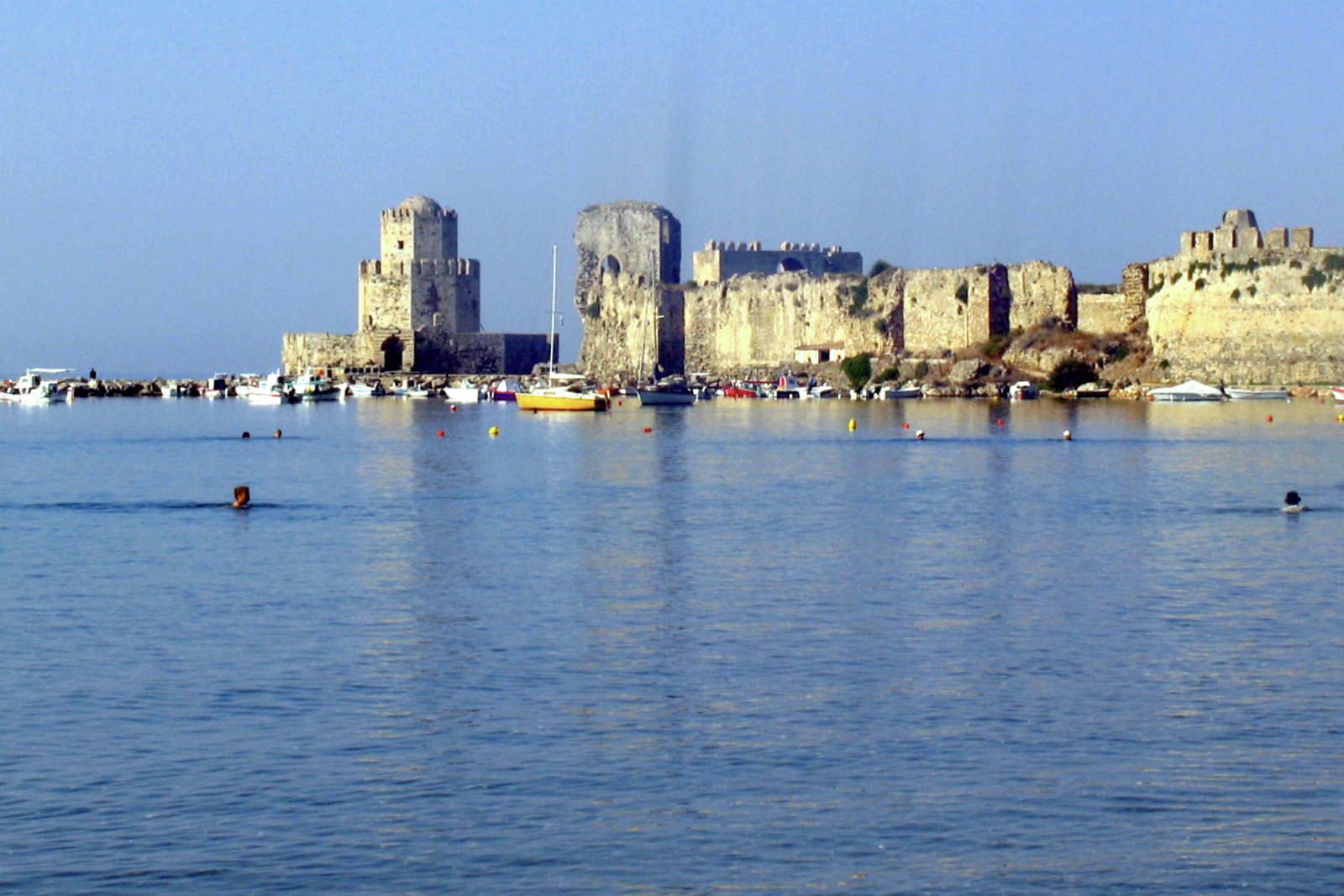
Fortress of Methoni (Wikimedia Commons)
At the south-western tip of Messenia, Methoni and Koroni each guard a peninsula facing the great sea routes of the Mediterranean. For several centuries, these two fortified ports were among Venice's most important possessions in the Peloponnese, to the point of being called the "eyes of Venice" towards the East. Today, their spectacular castles, their small towns and the beaches that surround them form one of the most beautiful itineraries on the Messenian coast.
Methoni and its immense fortified city
Methoni occupies a natural promontory facing the islands of Sapienza and Schiza. Its port was a favoured stopover on the routes linking the Adriatic, the eastern Mediterranean and the Holy Land. After the Fourth Crusade, Venice took possession of Methoni and Koroni; the Treaty of Sapienza of 1209 officially confirmed its sovereignty over both places.
Venetian rule transformed Methoni into a major commercial and military port. Merchants, diplomats, officials and pilgrims stopped there to resupply or repair their ships. This prosperity came to an abrupt end in 1500, when Sultan Bayezid II seized the city after a deadly siege. The Venetians retook it in 1686 before losing it definitively to the Ottomans in 1715.
The fortress of Methoni★, which covers about nine hectares, is today one of the most impressive fortified complexes in Greece. A wide moat separates it from the mainland; it is crossed by a monumental fourteen-arch stone bridge, built by the French expeditionary corps after 1828. Behind the Venetian gate lies the old fortified town, where walls, bastions, Ottoman baths, cisterns, church ruins and the so-called column of Morosini survive.
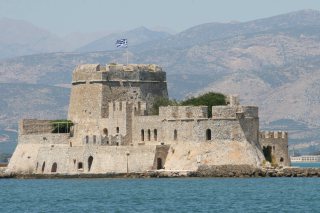
At the end of the peninsula, a stone causeway leads to the Bourtzi, a small octagonal tower isolated by the sea that has become the emblem of Methoni. Contrary to a widespread idea, this structure dates mainly from the first Ottoman domination, after 1500; it served successively as a guard post, refuge, prison and lighthouse.
The small modern town developed outside the walls after Greek independence. It retains a peaceful layout, a few neoclassical buildings and a sandy beach directly facing the castle. In the immediate surroundings, the early Christian catacombs of Agios Onoufrios, carved into the rock, are a more discreet heritage complement.
Koroni, a fortress still inhabited
On the other shore of the Messenian peninsula, Koroni overlooks the Gulf of Messenia from a promontory covered with houses and gardens. Occupation of the area dates back to Antiquity and the castle appears to have succeeded a Byzantine fortification. Having come under Venetian rule in the early 13th century, the place became a prosperous port welcoming merchants and pilgrims on the route to the East.
The Venetians considerably enlarged the fortifications and made Koroni a true fortified town. After the fall of Methoni in 1500, its inhabitants preferred to surrender to the Ottomans, and many of them went into exile in the Ionian Islands. Like Methoni, Koroni briefly returned to Venetian rule between 1685 and 1715, before remaining Ottoman until the War of Independence.
The castle stands out above all for its size and its living character: Koroni★ is the only fortress in Messenia that is still partly inhabited. Its two enclosures retain walls, towers and bastions from different periods. Inside are in particular the ruins of a large basilica, the church of Agios Charalambos and the monastery of Timios Prodromos, surrounded by gardens.
At the foot of the fortress, Koroni offers more than just an archaeological site. Its narrow streets, houses with tiled roofs, balconies, small squares and seafront give the town an almost island-like atmosphere. The harbour is lined with tavernas and cafés, while the long beaches of Zaga and Memi stretch south of the walls.
Between Methoni and Koroni
The road between the two towns crosses the southern tip of Messenia and provides access to Finikounda, a small resort facing a sandy bay, as well as to numerous beaches and coves. The area is compact enough to combine both fortresses during a single stay, but each deserves several hours to explore the ramparts and the towns that have grown up at their feet.
Map and places in Methoni and Koroni
Nearby places to stay
On the same theme