Nafplio
Port city in the Peloponnese with Venetian architecture, the first capital of modern Greece. A starting point for Mycenae and Epidaurus.
Nafplio, Venetian fortresses and old town of the Argolic Gulf
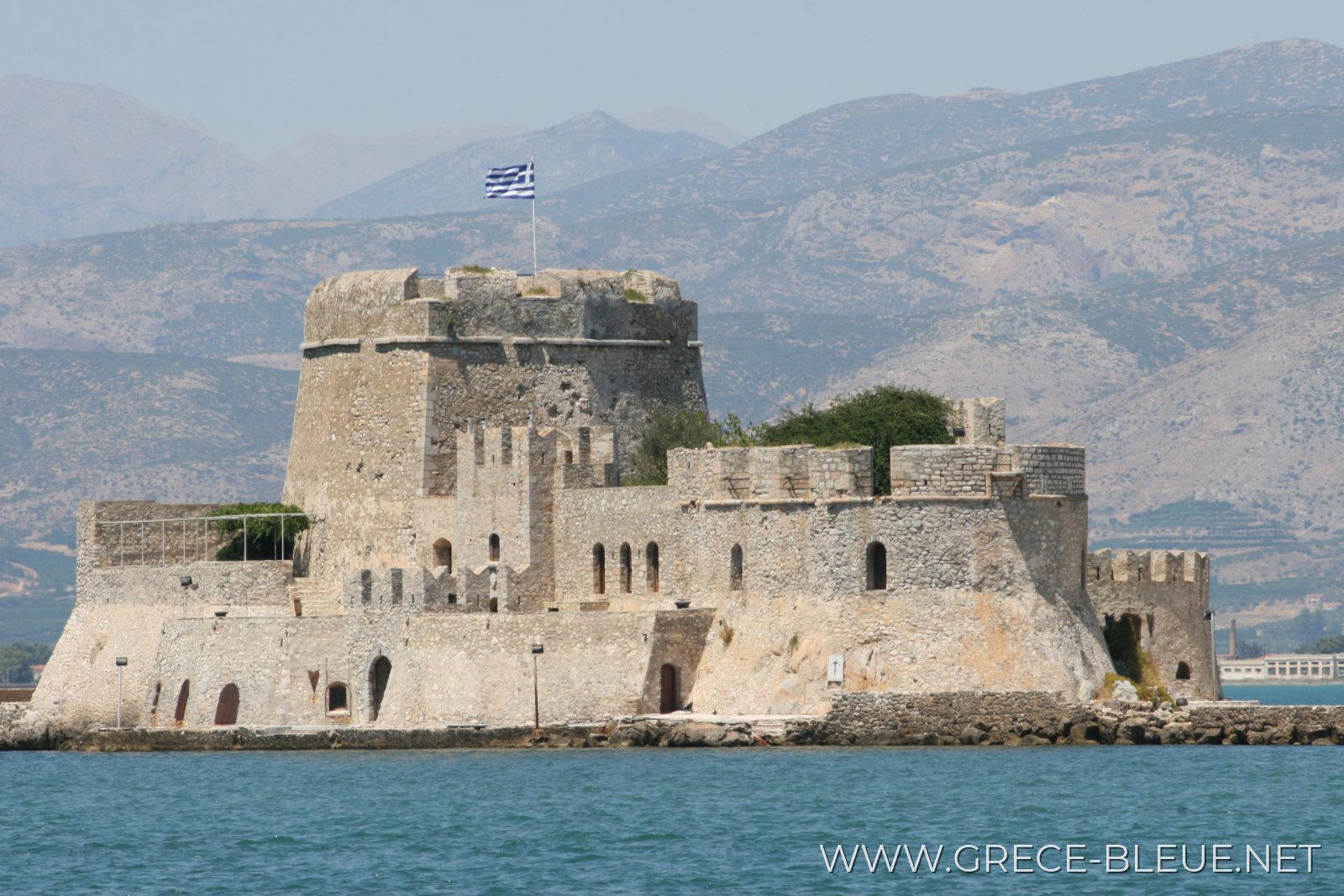
Bourtzi islet, Nafplio
At the head of the Argolic Gulf, Nafplio is one of the most pleasant and heritage-rich towns in the Peloponnese. Its old centre combines cobbled lanes, neoclassical houses, Venetian residences and old Ottoman buildings, between the port and the fortified heights of Akronafplia and Palamidi. Facing the seafront, the small fort of Bourtzi, set on an islet at the entrance to the port, completes one of the most characteristic urban landscapes in Greece.
Nafplio is also one of the best bases for exploring the Argolid. Tiryns★ is just a few kilometres away, while Mycenae★★★, Argos★ and Epidaurus★★★ are easily accessible. To the south, the beaches of Tolo and the ancient site of Asine offer an additional seaside excursion.
The town itself deserves at least a full day if you wish to visit Palamidi, wander through the old town and see the Archaeological Museum.
A town contested between Byzantines, Franks, Venetians and Ottomans
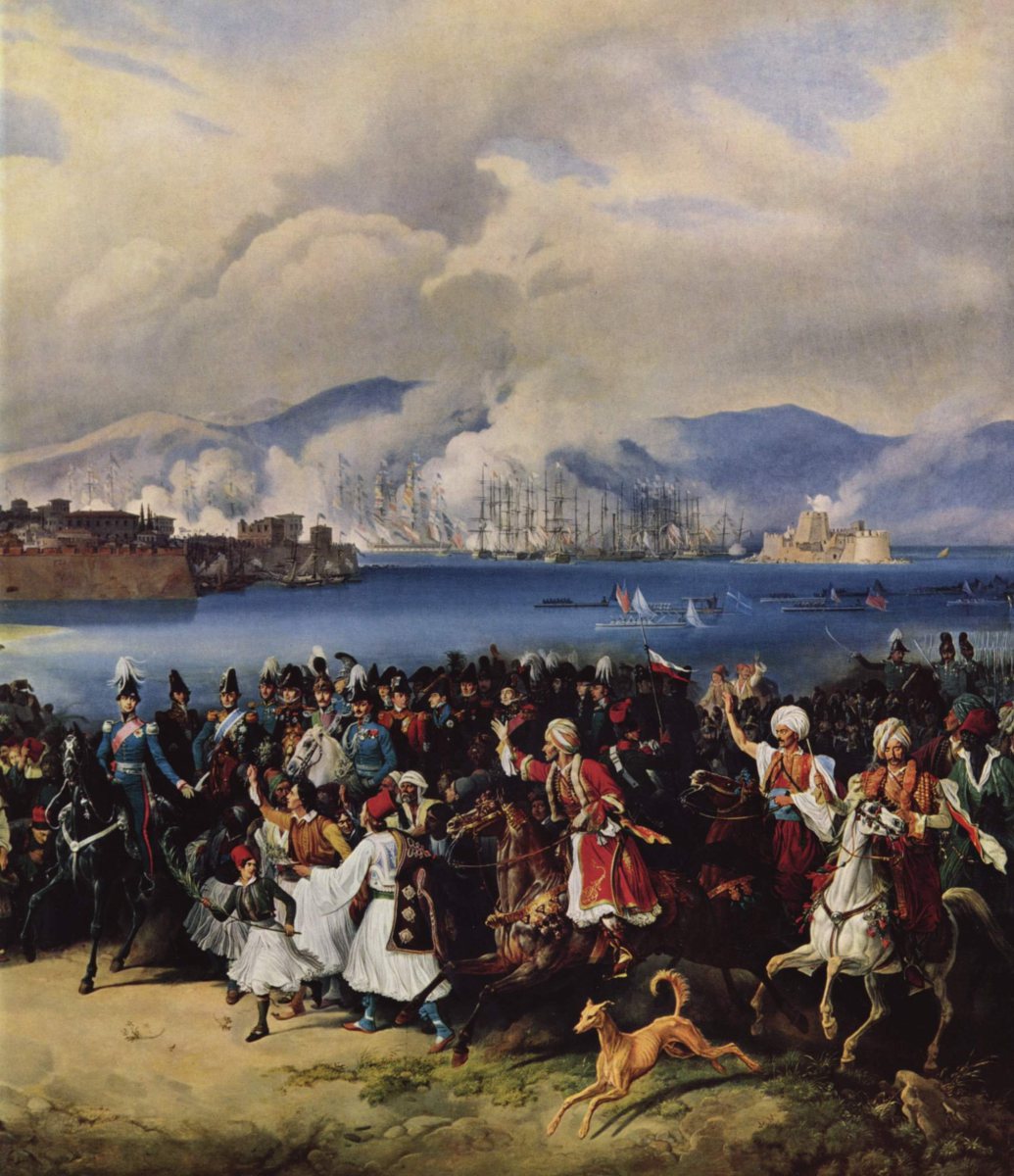
The arrival of King Otto in Nafplio (Peter von Hess, 1835)
Nafplio's naturally protected position explains the military importance the town retained for several centuries. After the Byzantine period, it passed under Frankish rule in the 13th century, then into the hands of Venice at the end of the 14th century. The Ottomans seized it in 1540. In 1686, the Venetians led by Francesco Morosini retook the town and made "Napoli di Romania" the capital of their Kingdom of the Morea.
This second Venetian occupation, though brief, profoundly transformed Nafplio. The fortifications were modernised, new military works built and the lower town redeveloped. The spectacular Palamidi was built in the final years of this period. These defences did not, however, prevent the Ottomans from retaking Nafplio in 1715.
The town then played a major role during the Greek War of Independence. The capture of Palamidi by the Greek insurgents at the end of 1822 led to the liberation of Nafplio. Designated in 1827 as the first capital of the new Greek state, it welcomed Ioannis Kapodistrias, the first governor of Greece, in 1828. He was assassinated in 1831 in front of the church of Agios Spyridon, in a lane of the old town. Nafplio retained its status as capital until 1834, when King Otto transferred the capital to Athens, chosen notably for the symbolic power of its ancient past.
The old town of Nafplio
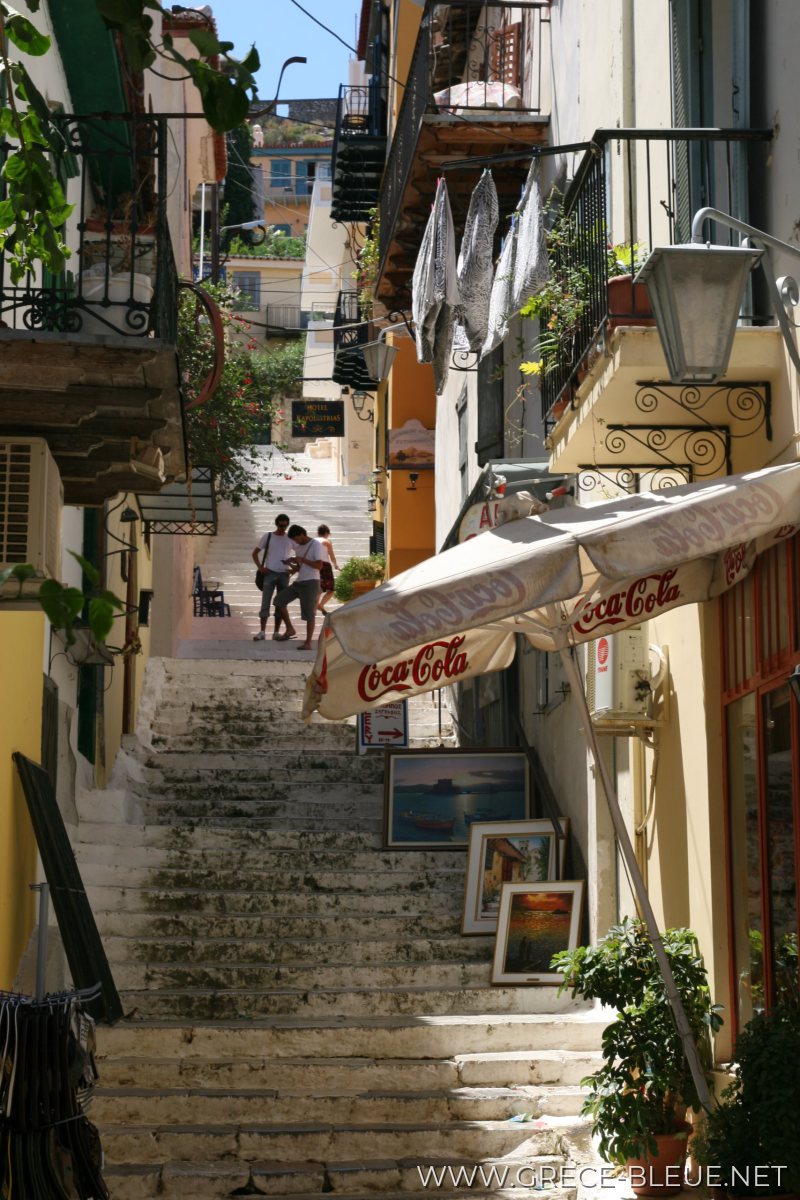
Historic centre of Nafplio
The heart of Nafplio is easy to explore on foot. Its narrow streets stretch between the port and the slopes of Akronafplia, with houses with tiled roofs, balconies, stairways and many neoclassical buildings constructed or altered in the 19th century. The town also preserves much older traces: Ottoman fountains, former arsenals, mosques and elements of the Venetian fortifications.
Syntagma Square forms the monumental centre of the old town. It is bordered by the imposing former Venetian arsenal of 1713, which now houses the Archaeological Museum, as well as by the Vouleftiko, a former Ottoman mosque that hosted the parliamentary institutions of the new Greek state in the 19th century. Not far away, the former Trianon also occupies a former mosque.
In the neighboring alleys stands the Church of Agios Spyridon, rebuilt in the early 18th century. It was in front of its entrance that Kapodistrias was fatally attacked on September 27, 1831. This concentration of Venetian, Ottoman and Greek independence-related monuments allows one to read several centuries of history in just a few streets.
Palamède, Akronauplia and Bourtzi: the three fortresses of Nafplio
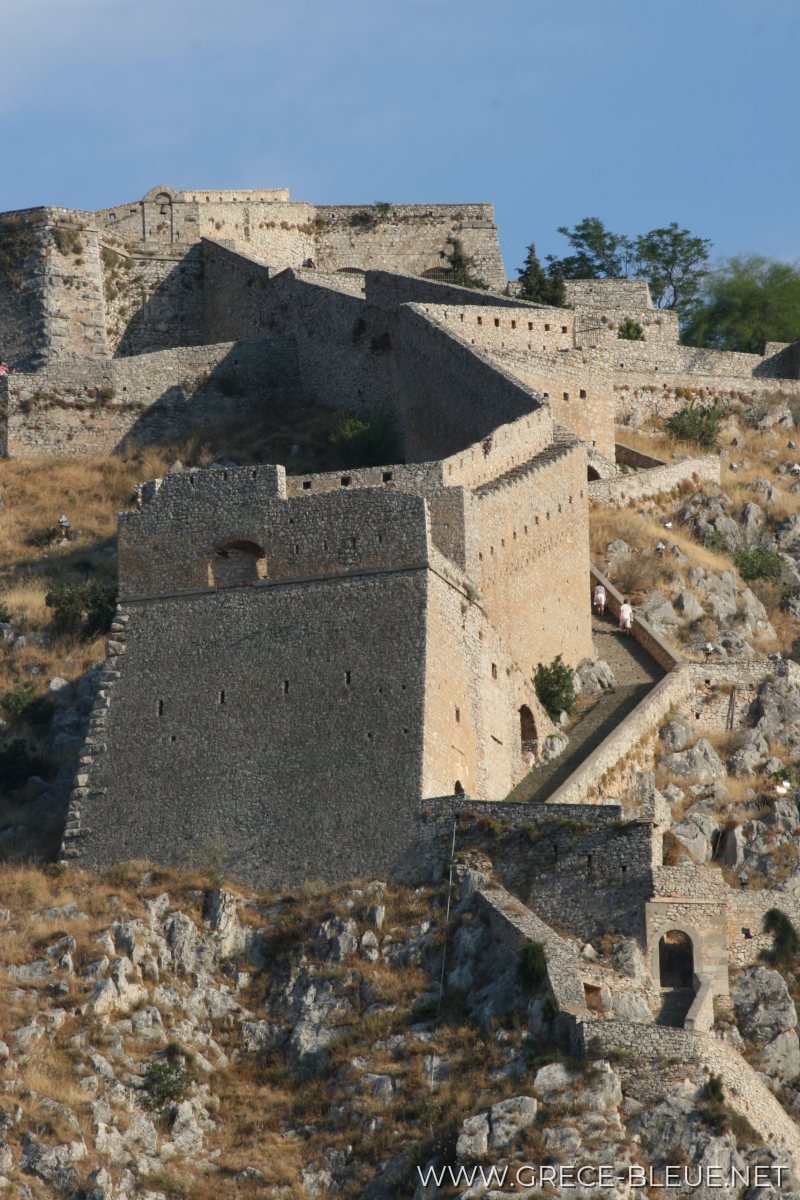
Fort Palamède, Nafplio
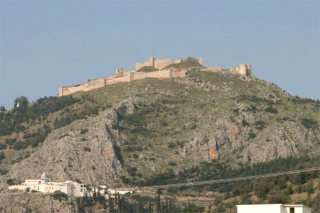
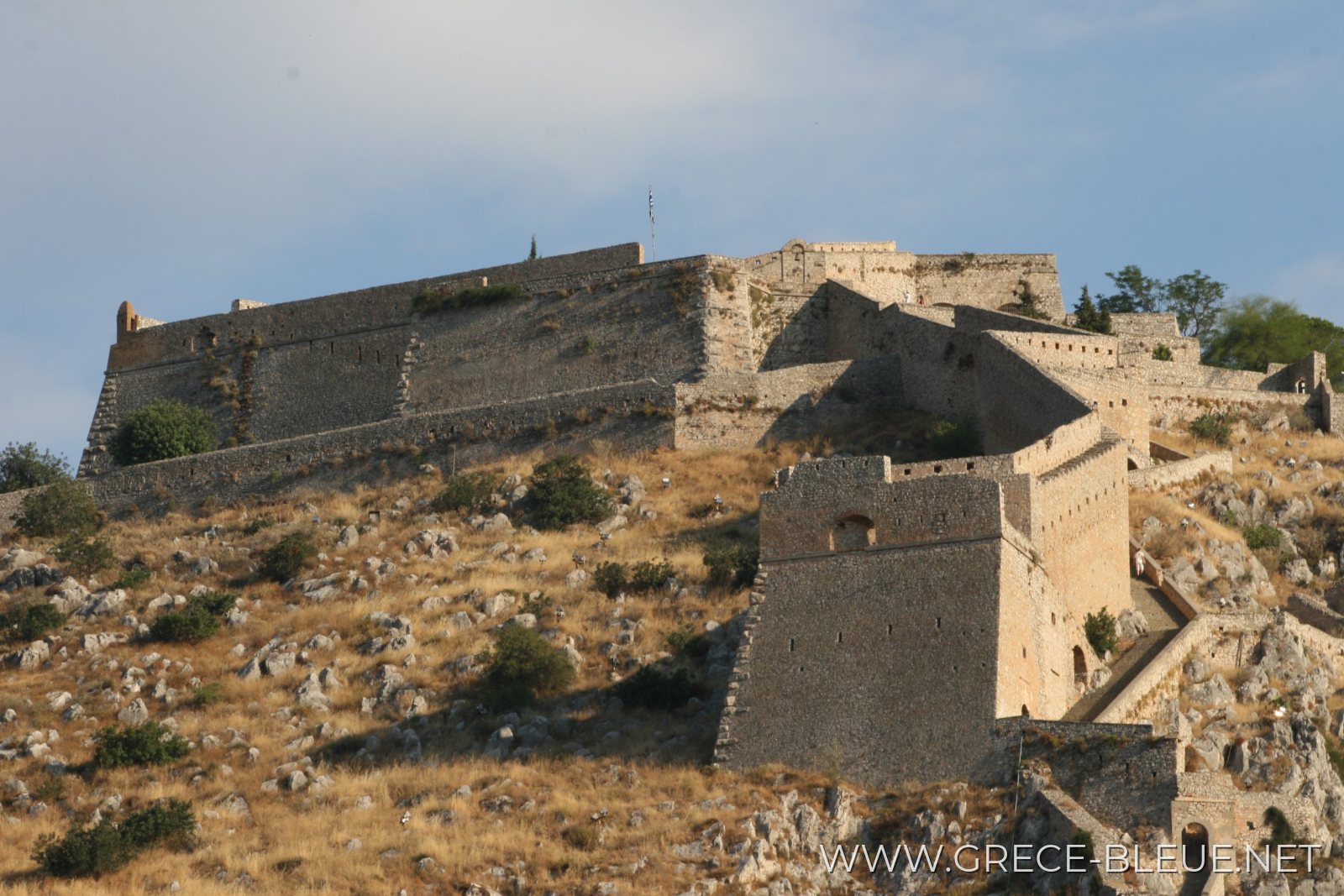
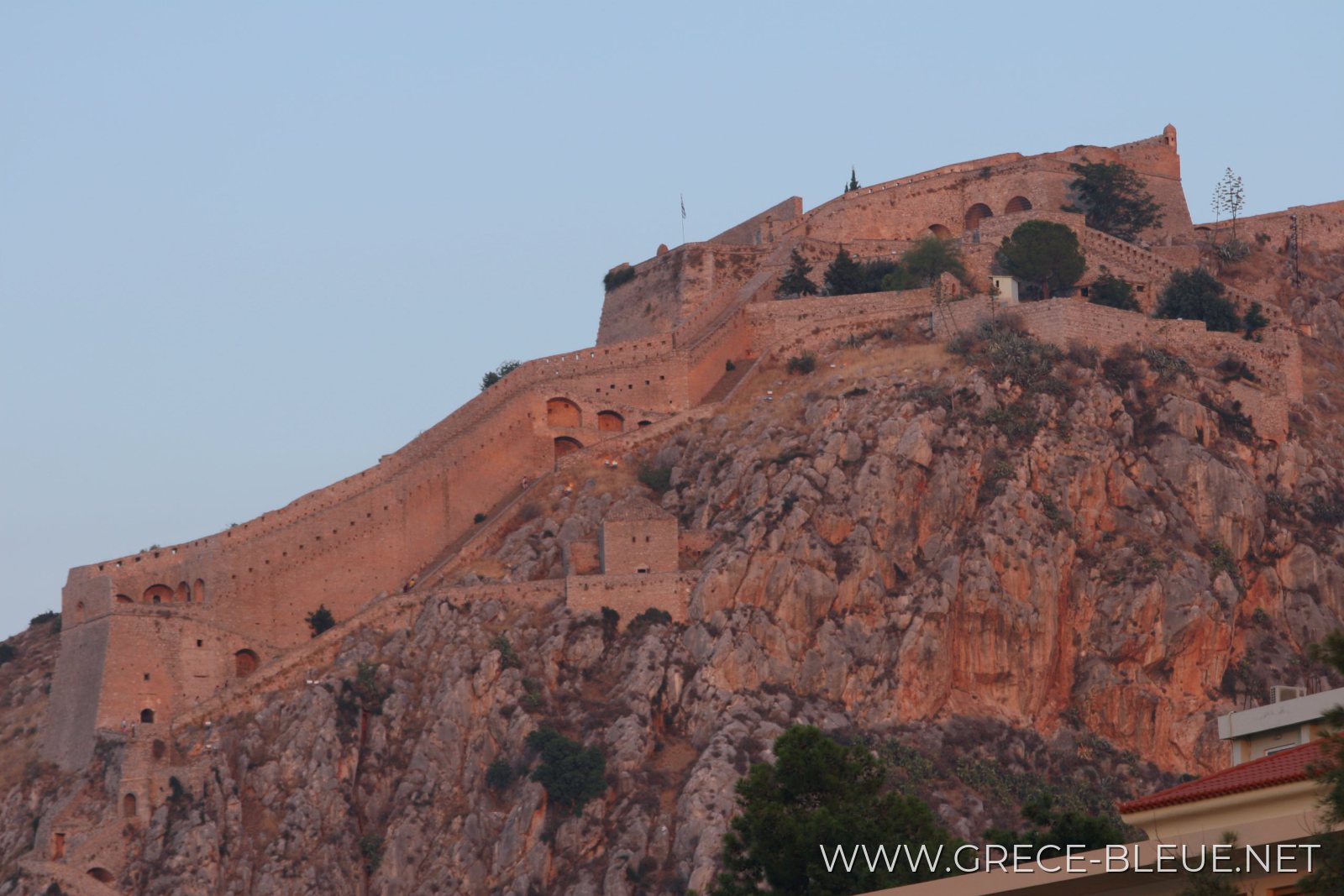
Dominating the town at an altitude of 216 meters, the Palamède★ is the most spectacular monument in Nafplio. The Venetians built it essentially between 1711 and 1714 according to the most modern principles of European fortification. The complex comprises eight bastions capable of operating relatively autonomously and linked by a system of walls and passages.
The visit allows you to explore ramparts, gates, bastions and staircases, as well as the small Church of Saint Andrew. One of the bastions was later used as a prison; tradition places there in particular the cell of Theodoros Kolokotronis, a major figure of the War of Independence. The main interest, however, remains the fortified complex itself and the very extensive views over Nafplio, Akronauplia, Bourtzi and the Argolic Gulf. Access is possible by road or via the long staircase leading directly up from the town.
Lower but much older, Akronauplia★ occupies the rocky peninsula that directly overlooks the old town. This position was fortified since Antiquity and then constantly reworked by Byzantines, Franks, Venetians and Ottomans. Its various enceintes and bastions thus bear witness to a military history far longer than that of the Palamède. A walk on the heights offers beautiful viewpoints over the rooftops of the old town and the port.
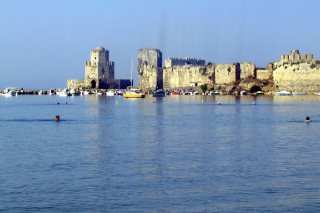
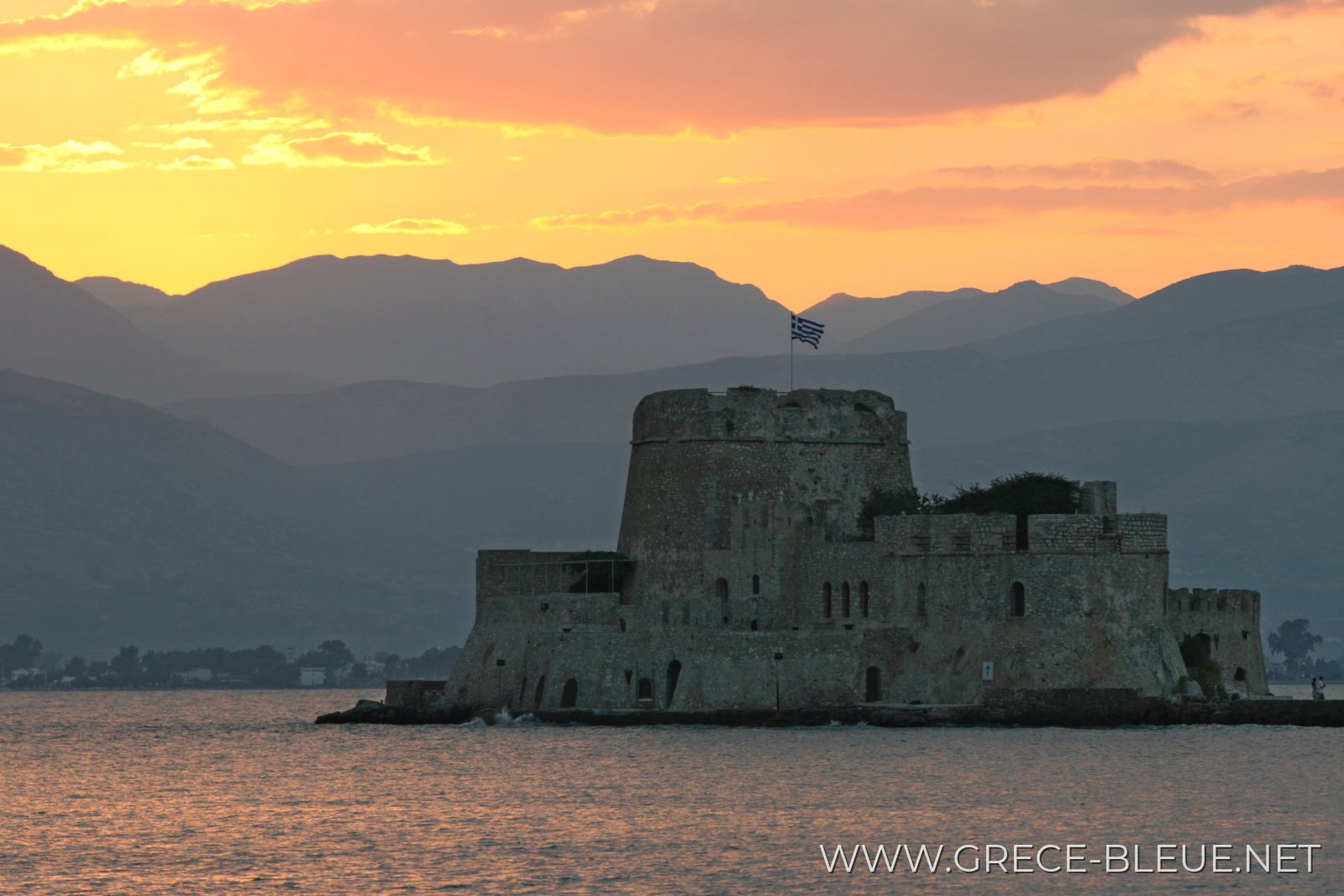
Finally, in the middle of the harbor, Bourtzi★ has become the maritime emblem of Nafplio. The Venetians fortified this islet during their first domination in order to control access to the port. A heavy chain could formerly be stretched between the fort and the town's defenses to close the passage to enemy ships. Transformed and reused over the centuries, the small fortified structure can now be visited from the port.
Museums, seaside promenade and beaches
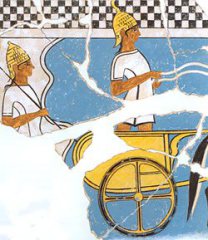
The Archaeological Museum of Nafplio★★ is particularly interesting for complementing a visit to the sites of the Argolid. Housed in the former Venetian arsenal on Syntagma Square, it brings together objects originating in particular from Tiryns, Midea, Dendra, Asine and Franchthi. Its most spectacular piece is the famous Mycenaean armor of Dendra, an almost complete bronze panoply dating from the 15th century BC.
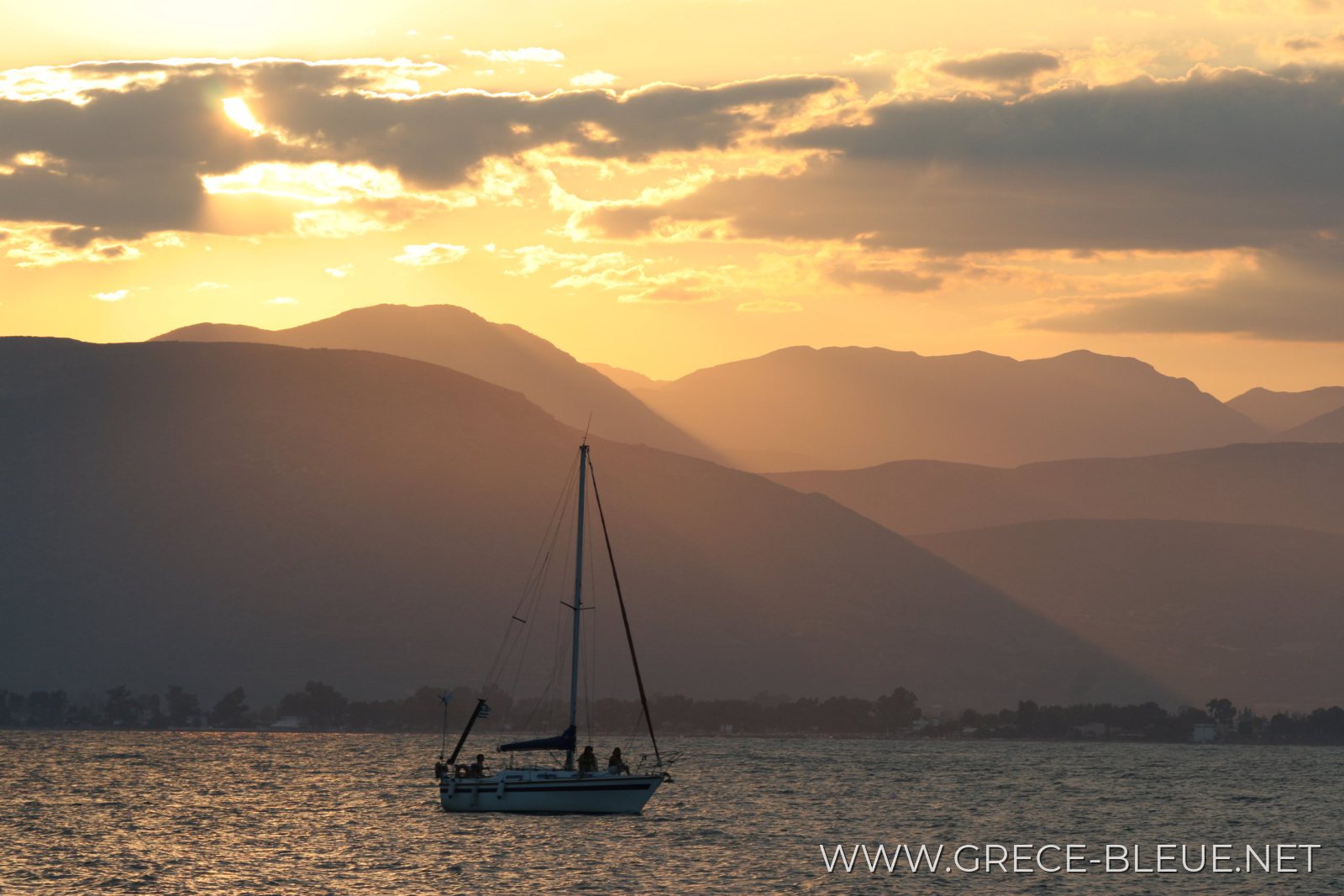
Nafplio, coast
The town also has a War Museum, devoted in particular to the War of Independence and Greek military history, as well as several small collections. For a first visit, however, the Archaeological Museum remains the most directly complementary to the great ancient sites of the region.
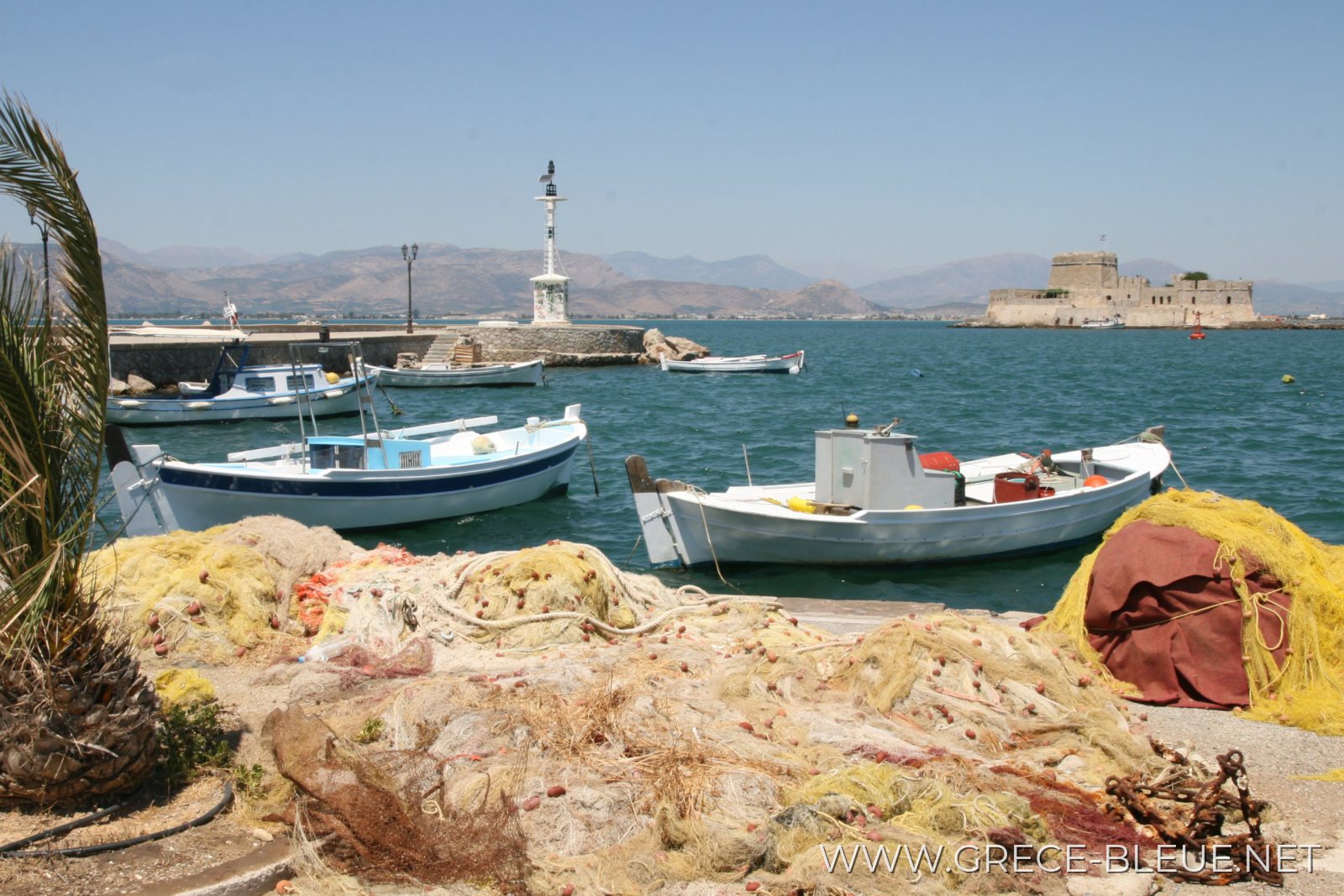
The seafront constitutes another facet of Nafplio. From the port, the quays offer a promenade facing Bourtzi, while a path running along the foot of Akronauplia leads to the Arvanitia area and its small beach. Further on, the vast Karathona beach, surrounded by hills, offers more space for swimming.
Gallery
Historic centre of Nafplio
Fort Palamède, Nafplio
Fort Palamède, Nafplio
Palamidi, Nafplio
Bourtzi Castle, Nafplio
Nafplio, coast
Nafplio, Greece
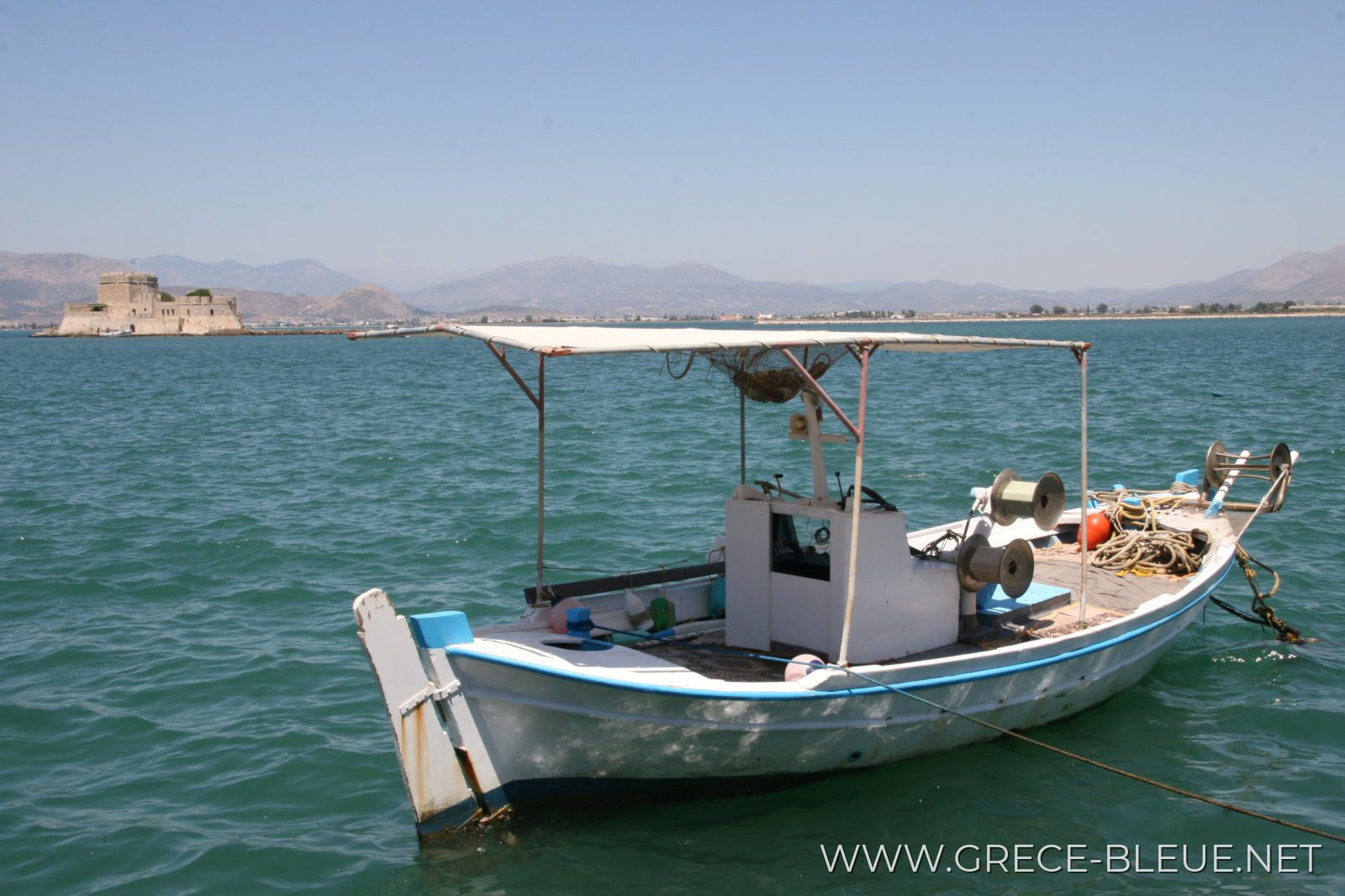
Nafplio, Greece
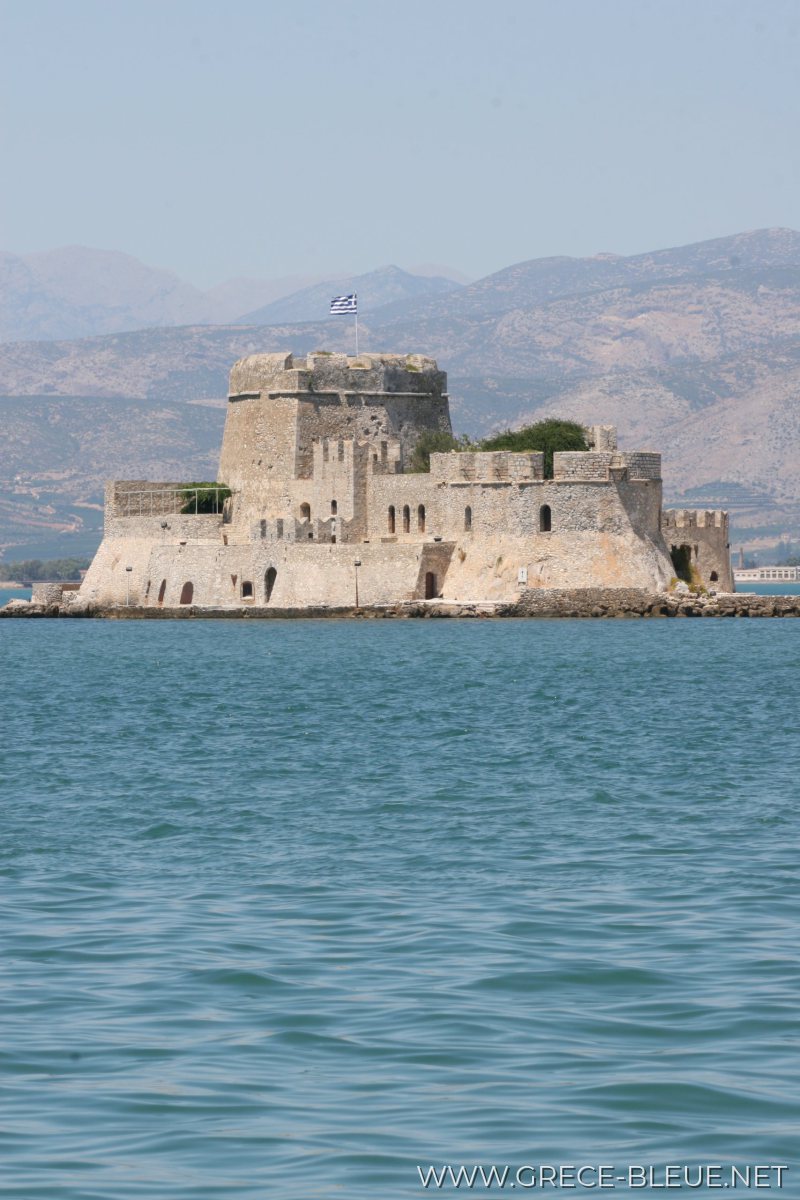
Bourtzi islet, Nafplio
Bourtzi islet, Nafplio
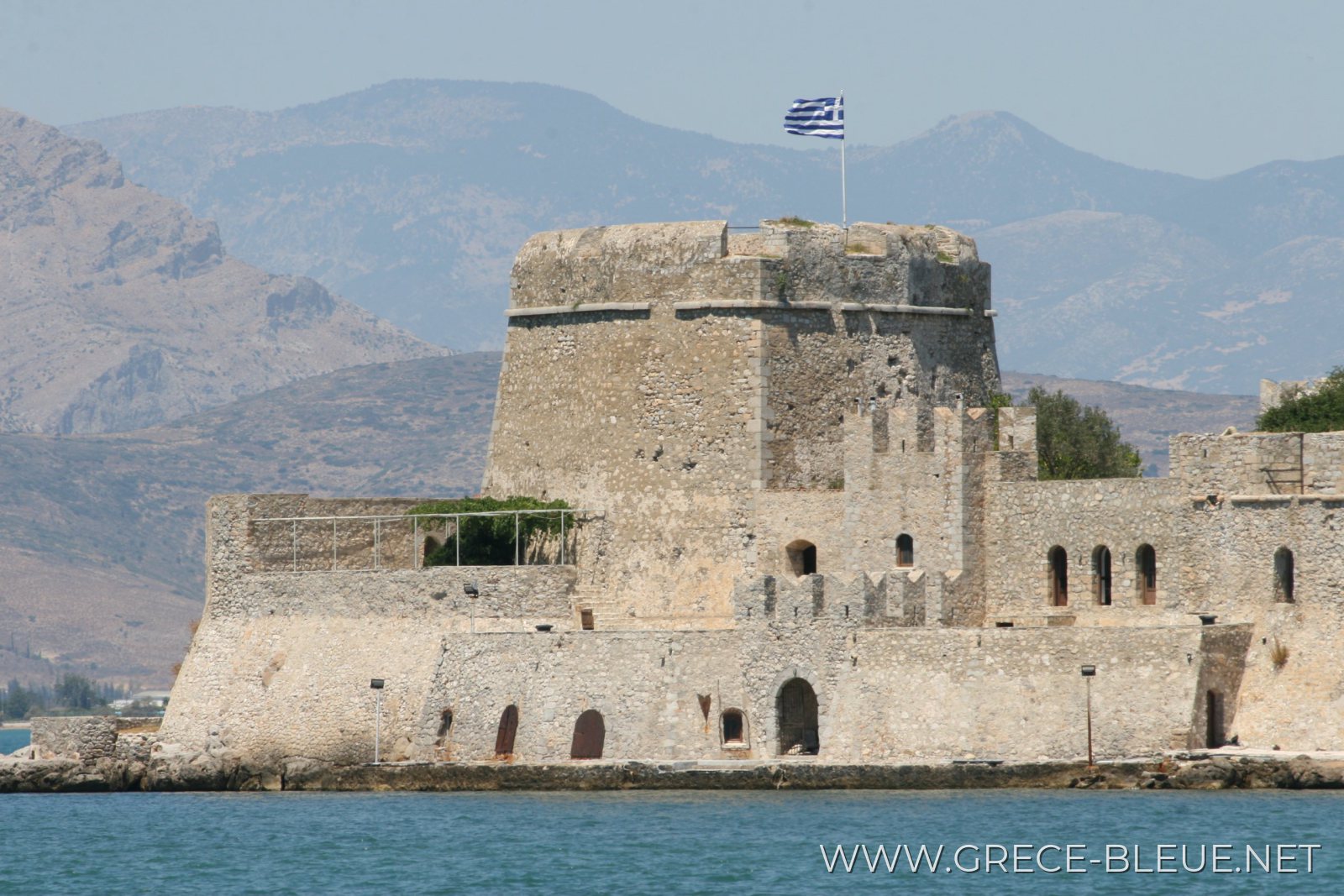
Bourtzi islet, Nafplio
Tolo and ancient Asine, south of Nafplio
About ten kilometres south-east of Nafplio, Tolo is the most obvious coastal excursion from the town. This seaside resort stretches around a sheltered bay facing the small islands of Romvi, Koronisi and Daskalio. Its long Psili Ammos beach, water sports and tavernas make it above all a destination for swimming and seaside holidays.
Its main heritage attraction lies just a few hundred metres away: ancient Asine★, set on the rocky promontory of Kastraki between Tolo bay and Plaka beach. Mentioned by Homer, Asine was occupied for more than three millennia and took part in the maritime trade linking the Mycenaean palaces of Argolis to the Aegean world. Visitors can walk among the remains of the acropolis, the fortifications and the lower town, in a particularly pleasant coastal setting. The site also inspired the famous poem The King of Asine by George Seferis.
Sources and information
- Visit Greece – Nafplio
- Ephorate of Antiquities of Argolida – Archaeological sites and monuments of Nafplio
- Ephorate of Antiquities of Argolida – Palamidi Castle
- Ephorate of Antiquities of Argolida – Akronafplia
- Ephorate of Antiquities of Argolida – Bourtzi
- Ephorate of Antiquities of Argolida – Archaeological Museum of Nafplio
- Visit Peloponnese – Tolo
- Visit Peloponnese – Ancient site of Asine
Map and places in Nafplio
Nearby places to stay
On the same theme