Tiryns, Midea and Dendra
Tiryns is a fortified Mycenaean citadel in Argolis, near Nafplio, famous for its Cyclopean walls and the remains of its palace. Inscribed on the UNESCO World Heritage List together with Mycenae, it holds a special place in Greek mythology.
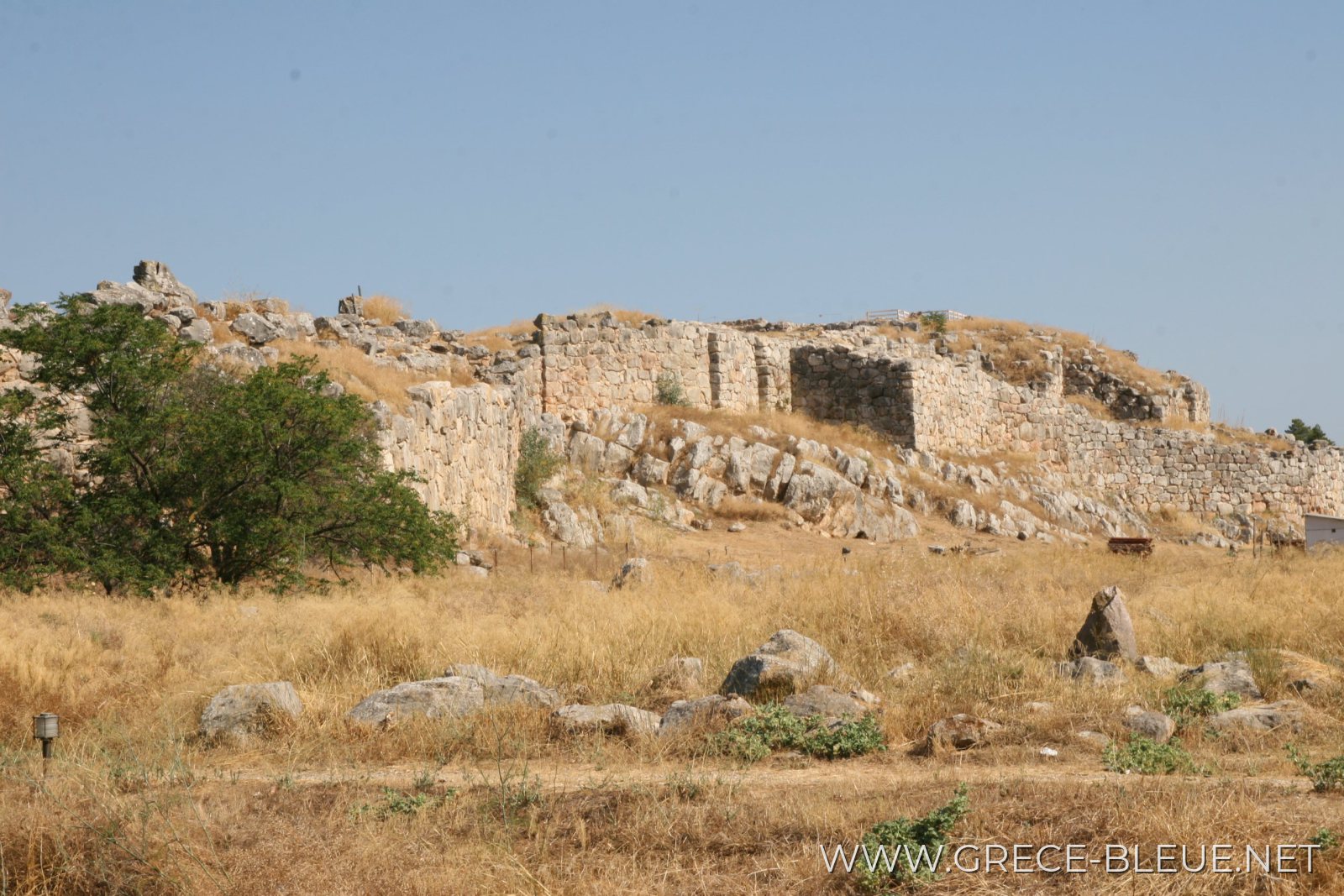
Less famous than Mycenae but essential for understanding the civilization that dominated the Argolid in the Bronze Age, Tiryns, Midea and Dendra form a remarkable group of Mycenaean sites around the Argive plain. The first two were powerful fortified citadels, while Dendra housed a rich necropolis linked to Midea. Their visit reveals palatial architecture and Cyclopean walls as well as funerary practices and the organization of a society dominated by warrior elites.
Tiryns, the fortress with Cyclopean walls
Tiryns is one of the great citadels of the Mycenaean civilization, established on a low hill about 5 km from Nafplio, which was once a long rocky promontory overlooking the coastal part of the Argolid plain. Along with Mycenae, it was one of the main palatial centers of Bronze Age Greece. Less extensive and less monumental at first glance than its famous neighbor, it impresses above all by its gigantic Cyclopean fortifications★★★, among the most spectacular achievements of Mycenaean architecture.
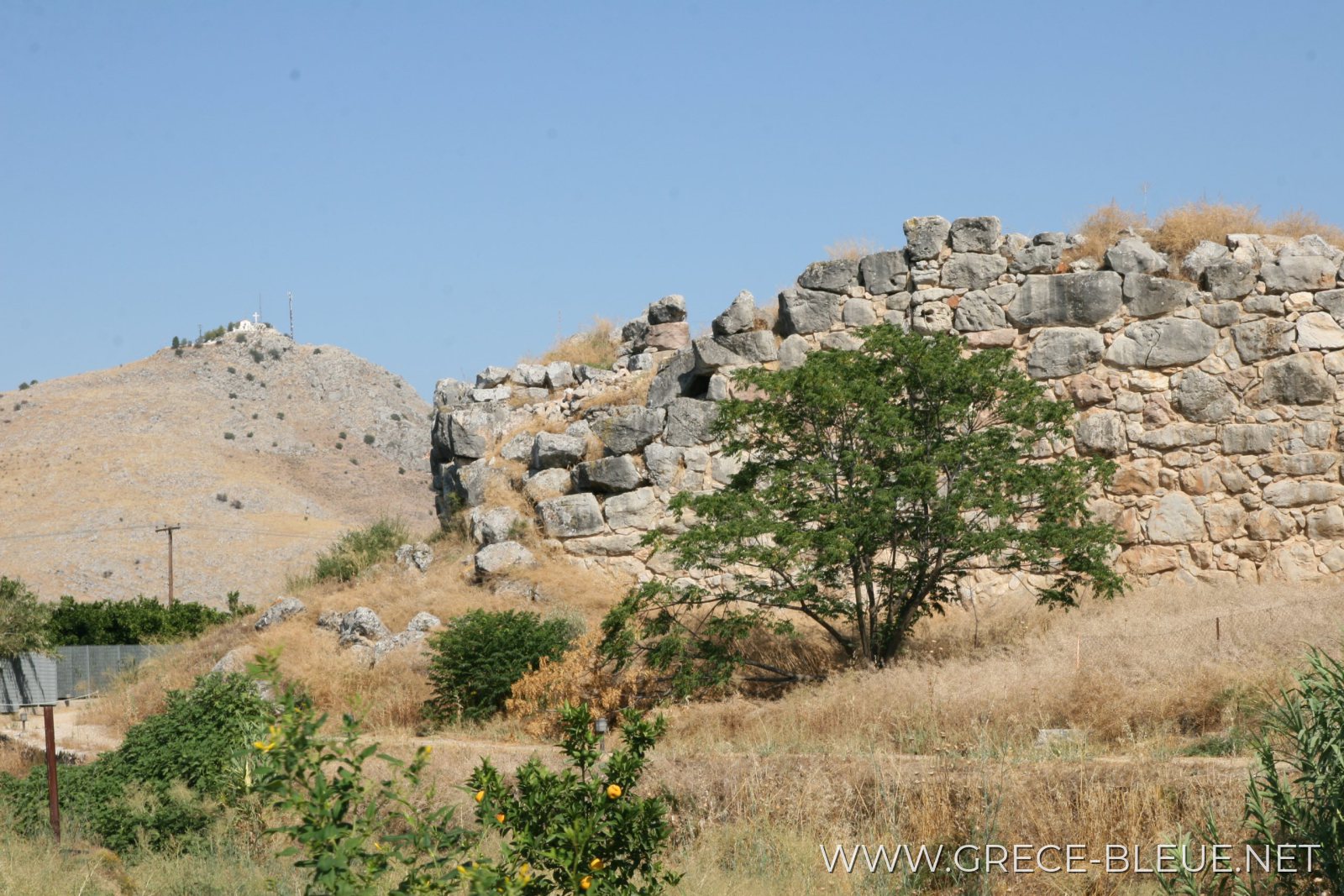
Enceinte de Tirynthe
The site was occupied from the Neolithic period and already saw significant development in the 3rd millennium BC, as evidenced by a remarkable circular building 27 metres in diameter. But Tiryns reached its peak in the Late Bronze Age, particularly in the 14th and 13th centuries BC, when the hill was gradually transformed into a true fortified palatial citadel. After the collapse of the Mycenaean system around 1200 BC, it remained inhabited but gradually lost its importance to Argos. Since 1999, Tiryns has been inscribed together with Mycenae★★★ on the UNESCO World Heritage List.
According to mythology, the walls of Tiryns were built by the Cyclopes for King Proetus. Only these mythical giants were strong enough to move the stone blocks. The term "Cyclopean masonry" has since remained attached to this type of Mycenaean construction.
The city is also closely associated with Heracles: several traditions place his origins in the Argolid and, above all, the hero is said to have lived at Tiryns when he had to serve King Eurystheus, who imposed the famous Labours on him.
Tiryns thus stands out less for the number of visible monuments than for the exceptional strength of its defensive system. The site is relatively compact and generally quieter than Mycenae; its walls, vaulted passages and views over the Argolid plain are the main points of interest. The large-scale excavations begun in the 1880s by Heinrich Schliemann and Wilhelm Dörpfeld have since been continued by Greek archaeologists and the German Archaeological Institute.
A fortress on the scale of the Cyclopes
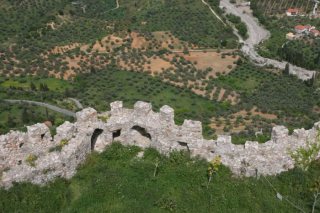
The visit allows you to explore the three sectors of the acropolis — upper, middle and lower — protected by an enclosure whose perimeter reached about 750 metres. Some walls are up to 8 metres thick and 13 metres high. They are made of enormous limestone blocks roughly fitted together, whose dimensions explain the description "Cyclopean" given since Antiquity to this type of masonry.
Among the most remarkable features are the galleries★★ built inside the walls themselves. These long passages covered by corbelled vaults, particularly well preserved on the south and east sides, are among the most original structures on the site. Probably used as storage spaces and as shelters in times of conflict, they allow you to walk literally into the thickness of the fortifications.
Enceinte de Tirynthe
The Mycenaean palace
The upper part was occupied by the royal palace, once accessible through a succession of courtyards and monumental gates. At its centre was the great megaron, an official hall arranged around a central hearth surrounded by four columns and containing the location of the throne. The remains are now fairly levelled, but still allow one to distinguish the courtyards, apartments, storerooms and ancillary spaces that formed the palace complex. The fragments of frescoes discovered during the excavations bear witness to the once much richer decoration of these buildings.
The surroundings complete the visit. A tholos tomb was built about one kilometre from the citadel, while a spectacular hydraulic work of the 13th century BC, located further east, diverted the waters of a torrent in order to protect the region from flooding. This dam reminds us that the Mycenaeans were not only builders of fortresses, but also important developers of the territory.
Sources
Midea, the third great citadel of Argolida
To the north-east of the plain rises the acropolis of Midea★, regarded along with Mycenae and Tiryns as one of the three main Mycenaean centres of Argolida. Set at an altitude of about 270 metres, it occupies a commanding position allowing a large part of the plain to be watched over.
The citadel was surrounded in the 13th century BC by a Cyclopean wall about 450 metres long, accessible through two monumental gates. The excavations have brought to light groups of rooms used as storerooms and workshops, fragments of wall paintings, as well as vases bearing inscriptions in Linear B. Moulds and semi-precious stones also indicate the existence of workshops producing objects of prestige.
A violent destruction affected Midea at the end of the 13th century BC, probably as a result of an earthquake. Beneath the rubble of a building, archaeologists notably recovered the skeleton of a victim crushed during the collapse.
Dendra and the armour of a Mycenaean warrior
In the immediate vicinity of Midea, the necropolis of Dendra admirably completes the visit to the acropolis. The excavations there uncovered a tholos tomb and sixteen chamber tombs, mainly used in the 15th and 14th centuries BC. Some contained rich offerings: weapons, jewellery, gold and silver vases, seals and objects made from precious or imported materials.
The most spectacular discovery remains the famous Dendra armour★★, an almost complete bronze panoply dating from the end of the 15th century BC. Its large articulated plates protected the warrior's torso, shoulders and neck. Found in a chamber tomb, it is now displayed at the Archaeological Museum of Nafplio, along with other objects from Dendra, Midea and Tiryns.
Dendra has also yielded traces of sacrifices or burials of horses, while the wealth of the tombs underlines the high rank of their occupants. The whole thus offers a counterpoint to the palaces: after the fortifications and the spaces of power of Tiryns and Midea, Dendra allows one to approach the warriors and families who belonged to the elite of these societies.
Sources
- UNESCO – Archaeological Sites of Mycenae and Tiryns
- Ephorate of Antiquities of Argolida – Centres and monuments from Mycenaean times
- Ephorate of Antiquities of Argolida – Acropolis of Midea
- Ephorate of Antiquities of Argolida – Mycenaean Cemetery of Dendra
- Ephorate of Antiquities of Argolida – Archaeological Museum of Nauplio
Map and route
Near Tiryns, Midea and Dendra
Nearby places to stay
On the same theme