Mistra
Perched on a spur of the Taygetus above the plain of Sparta, Mistra was the capital of the Byzantine Despotate of the Morea from 1348 to 1460. The Palace of the Despots, monasteries and churches adorned with frescoes make up an almost entirely intact medieval town, inscribed on the UNESCO World Heritage List in 1989.
Mistra, the great Byzantine city of the Morea
Perched on a steep spur of Taygetus, overlooking the plain of Sparta, Mistra is one of the most remarkable medieval ensembles in Greece. A Frankish fortress that became the capital of the Byzantine Despotate of the Morea, the city reached its peak in the 14th and 15th centuries. Palaces, houses, walls, monasteries and churches covered in frescoes still cascade down the mountain, forming a veritable city now inscribed on the UNESCO World Heritage List.
From the Frankish fortress to the Despotate of the Morea
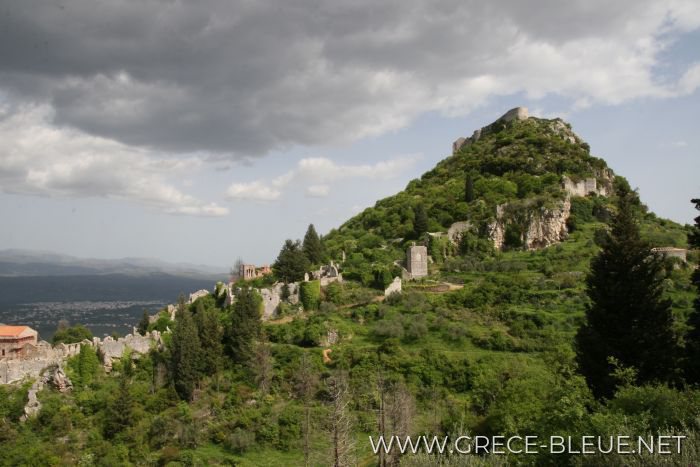
The history of Mistra begins in 1249, when William II of Villehardouin, Frankish prince of Achaea, had a fortress built on top of a hill about 620 metres high. After his defeat and capture by the Byzantines at the Battle of Pelagonia in 1259, he regained his freedom in exchange for several strongholds: Mistra was thus ceded to the Byzantine emperor in 1262.
The castle then became an essential base for the Byzantine reconquest of the Peloponnese. The inhabitants of the plain of Sparta gradually came to settle in the shelter of its walls, and a veritable town grew up below the citadel. In 1348, Mistra became the seat of the Despotate of the Morea, an autonomous province within the Byzantine Empire, first governed by the Kantakouzenos and then, from the end of the 14th century, by the Palaiologos.
In the 14th and 15th centuries, the city enjoyed remarkable political, artistic and intellectual prosperity. Aristocratic palaces, monasteries and churches were built and decorated with frescoes that rank among the finest achievements of late Byzantine art. Mistra also became one of the great centres of the Palaiologan intellectual renaissance, notably around the Neoplatonic philosopher George Gemistos Plethon, whose ideas helped renew interest in Greek philosophy in the West.
In 1460, Mistra was surrendered to the Ottomans. It nevertheless remained an important town, notably thanks to agriculture, trade and silk production, one of the main activities of the region. It came under Venetian rule from 1687 to 1715 before returning to the Ottomans. In 1770, after the Orlov revolt, Albanian troops ravaged the town and part of Laconia; Mistra never regained its former prosperity. Further destruction occurred during the Greek War of Independence, notably with the passage of Ibrahim Pasha's army in 1825. After the creation of the new town of Sparta in the 19th century, its inhabitants gradually left the ancient city.
Visiting the archaeological site of Mistra
Mystras
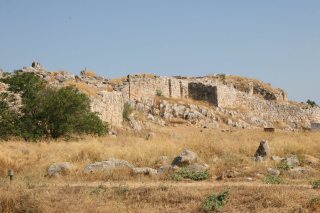
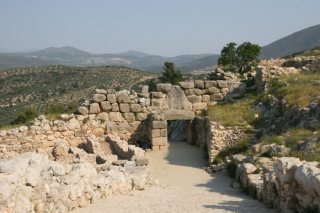
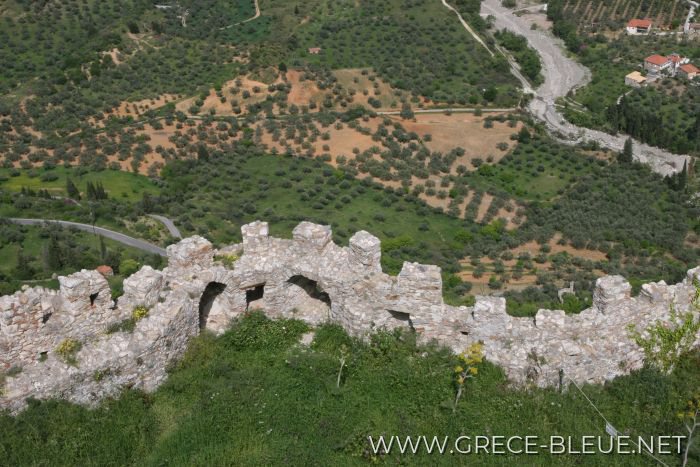
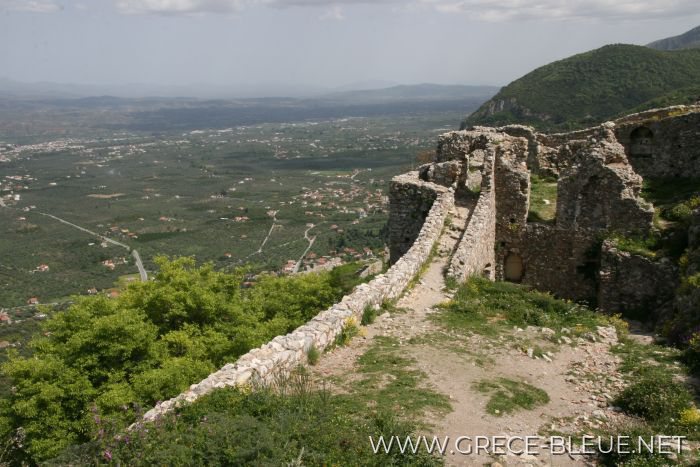
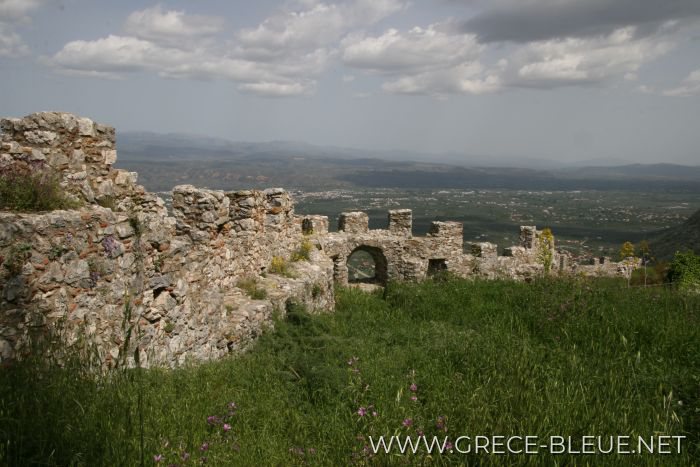
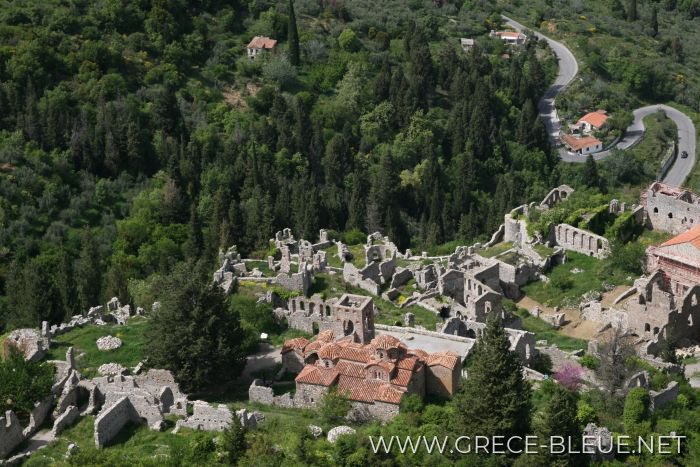
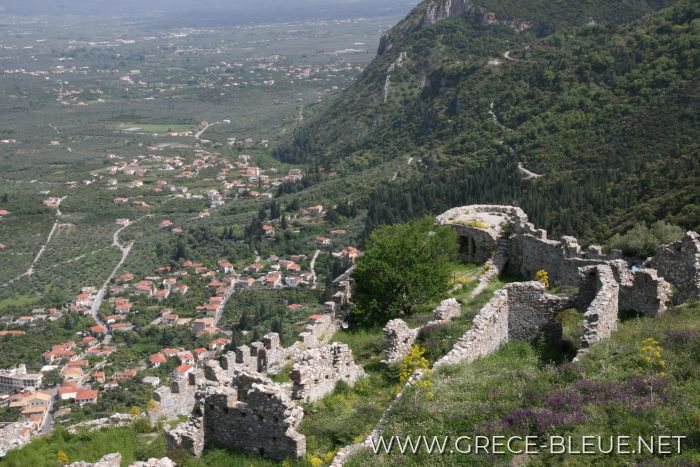
The site exceptionally preserves the layout of a fortified Byzantine city. At the very top is the citadel, dominated by Villehardouin's Frankish castle. Below stretches the Upper Town, protected by its own walls and organised around the vast Palace of the Despots★★, developed between the 13th and 15th centuries. Restored, this ensemble is the only surviving Byzantine palace complex in Greece.
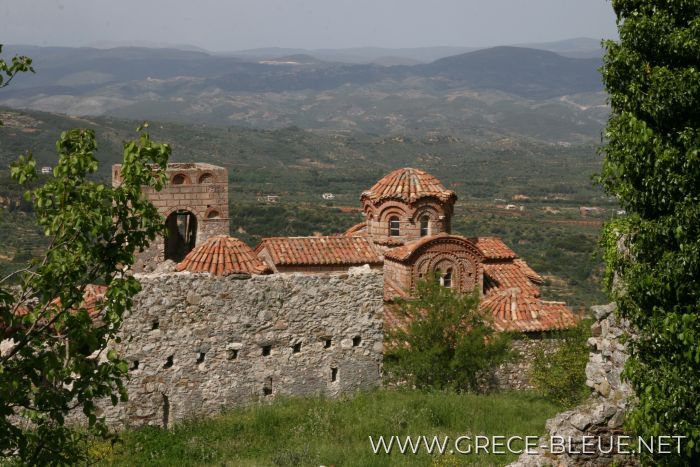
Not far from the palace stands Saint Sophia, built in the 14th century under Manuel Kantakouzenos and linked to the court of the despots. Paved paths then lead down to the Lower Town, where dwellings, workshops, religious institutions and monasteries were concentrated.
The Metropolis of Saint Demetrios★, begun in the 13th century, is the oldest large church in Mystras. Nearby, the Brontochion monastery includes in particular the churches of the Holy Theodores and of the Hodigitria, known as Aphentiko. The latter illustrates the remarkable "Mystras type", combining a three-aisled basilica on the lower level with a cross-plan church topped by several domes.
Further south, the monastery of the Peribleptos★★, partly built against the rock, preserves an exceptional set of 14th-century frescoes. The Pantanassa★, founded in the 15th century and still occupied by a community of nuns, is also remarkable for its architecture and wall paintings. Aristocratic houses, fortified gates, alleyways and remains of urban installations complete the visit and still allow one to understand the layout of the medieval city.
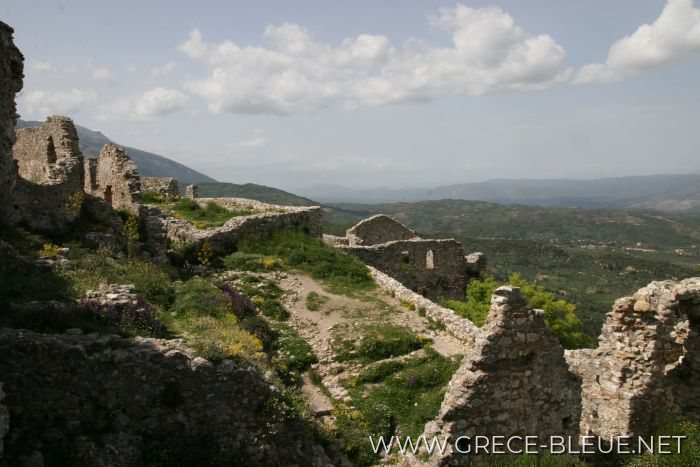
A visit to Mystras is thus as much that of a group of monuments as that of an almost entirely preserved Byzantine city, terraced between the plain of Sparta and the slopes of Taygetus. Its conservation, its frescoes and the major role it played during the last two centuries of the Byzantine Empire explain its inscription by UNESCO in 1989.
Gallery
Mystras
Mystras
Mystras
Mystras
Mystras
Mystras
Map and route
Near Mistra
Nearby places to stay
On the same theme