Phigalia and Bassae
The Doric Temple of Apollo Epikourios, built at an altitude of over 1000 metres in an isolated site in the Peloponnese, exceptionally combines the three classical Greek orders.
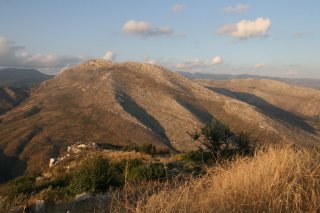
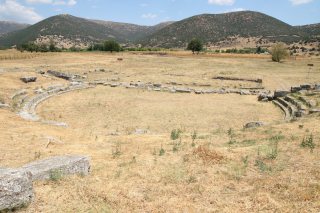
Phigalia, Bassae and the Neda valley form a particularly interesting ensemble for combining archaeology, mountain landscapes and the history of ancient Arcadia.
In the wild mountains of western ancient Arcadia, Phigalia and the sanctuary of Bassae form one of the most singular archaeological ensembles in the Peloponnese. The ancient city occupied a steep site above the valley of the Neda, while about ten kilometres away, on the heights of Mount Kotylion, the Phigalians built the remarkable Temple of Apollo Epikourios★★★, now a UNESCO World Heritage Site.
Phigalia, a fortified Arcadian city
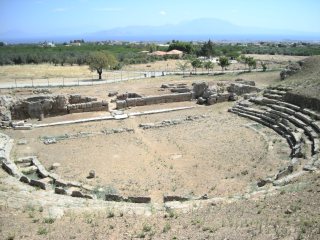
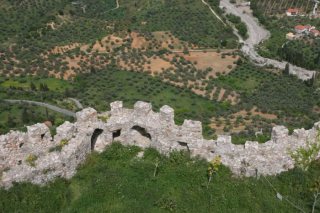
Ancient Phigalia spread around the present-day village of Ano Figalia, in a naturally defensive position overlooking the gorges of the Neda. The city was protected by a powerful circuit wall about 4 km★ long, reinforced with rectangular and circular towers, substantial portions of which are still visible.
Phigalia appears several times in the history of Arcadia. In the 7th century BC, it was occupied by the Spartans before being retaken by its inhabitants. Pausanias mentions several sanctuaries in the city, notably that of Artemis Soteira, as well as a gymnasium and a temple of Dionysus. The Phigalian territory extended to the sanctuaries of the neighbouring mountains, including that of Apollo at Bassae and that of Demeter Melaina on Mount Elaion.
The Temple of Apollo Epikourios at Bassae
Temple of Apollo Epikourios at Bassae
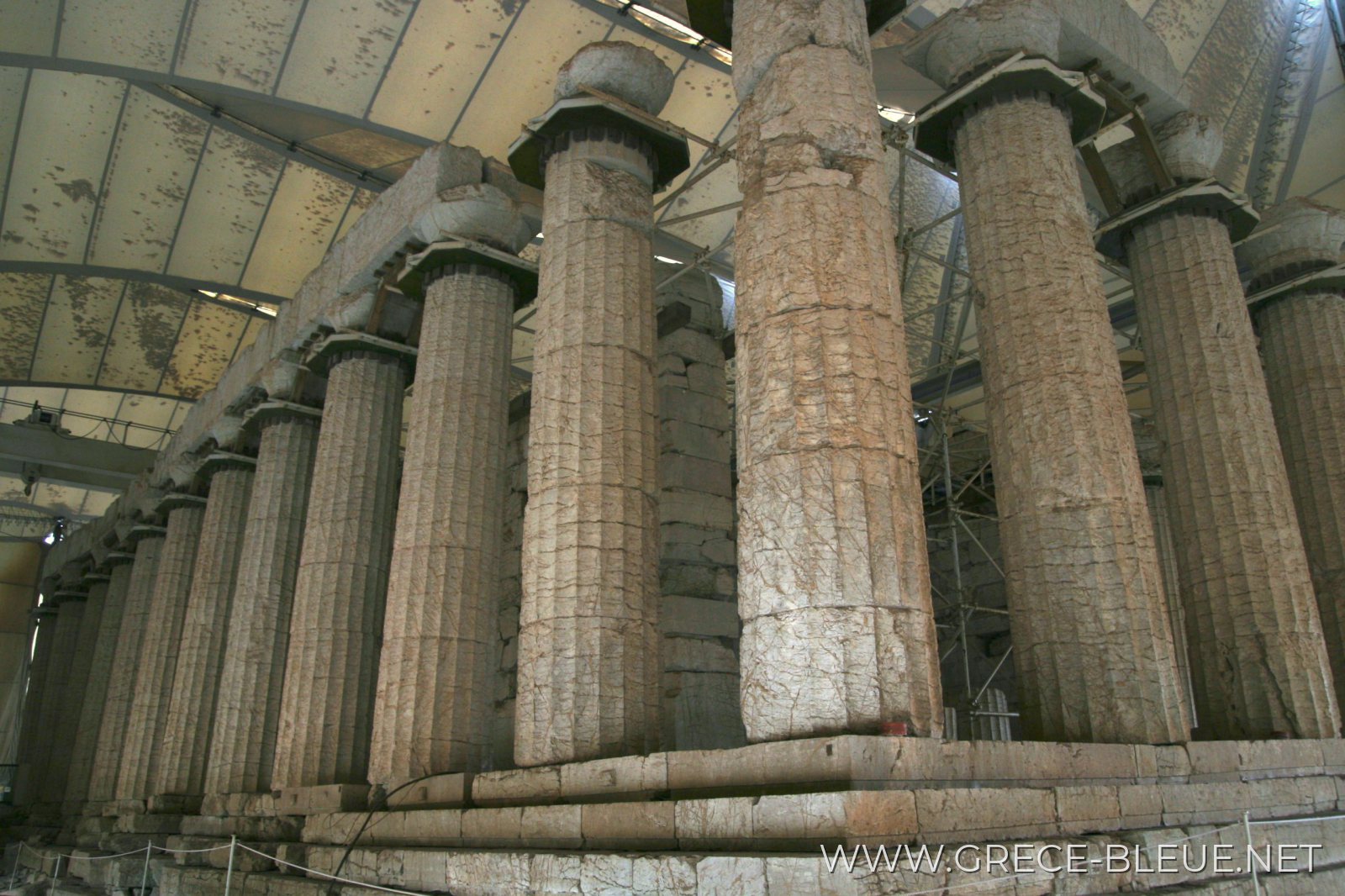
At an altitude of 1,131 metres, in an almost isolated mountain landscape, the present temple was built around 420-400 BC. The Phigalians dedicated it to Apollo Epikourios, "the one who brings help", to whom they attributed their protection against plagues. Pausanias admired its harmony so much that he ranked it, among the temples of the Peloponnese, just after that of Athena Alea at Tegea.
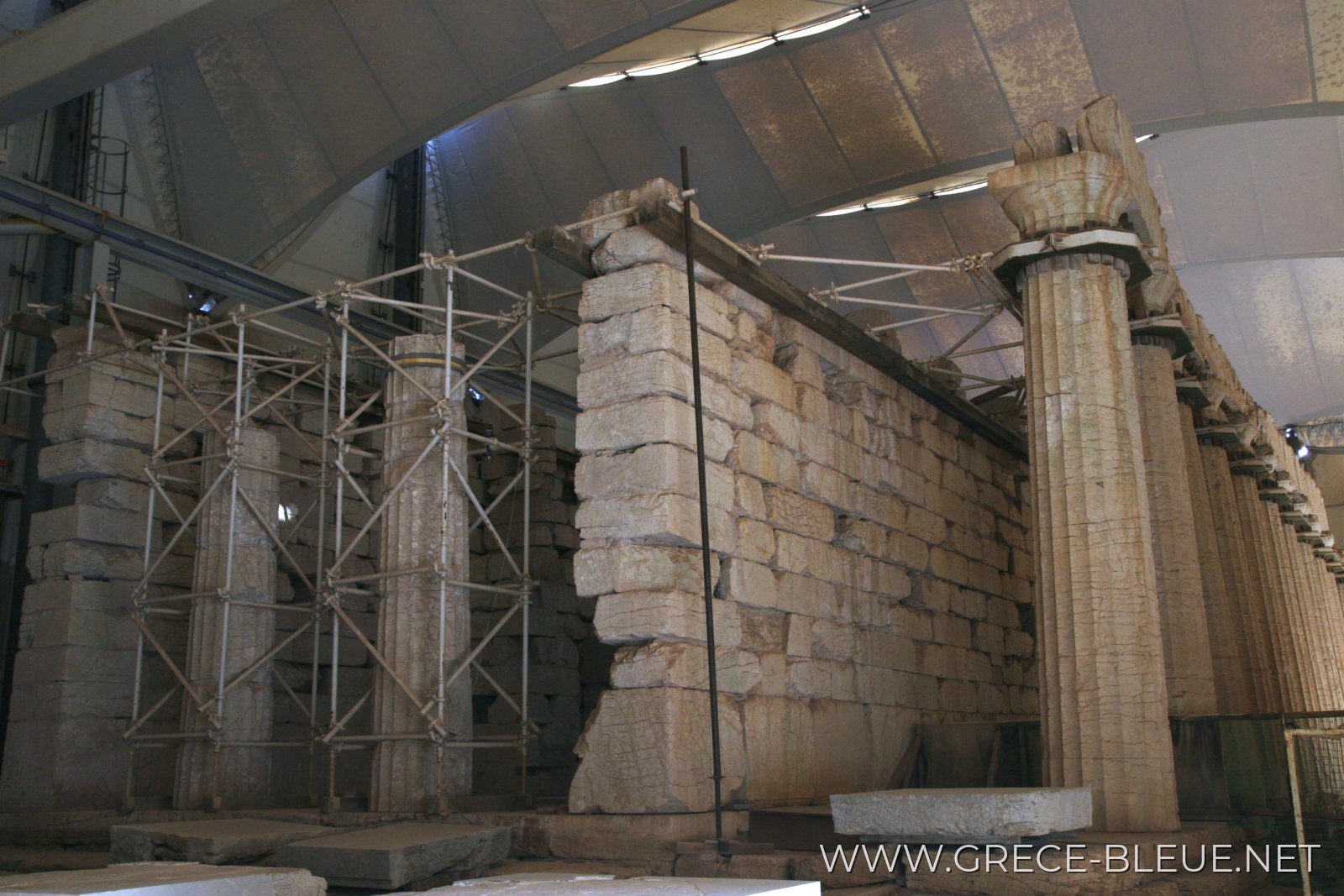
Ancient tradition attributes its design to Ictinus, one of the architects of the Parthenon. The monument is especially exceptional for combining the three great Greek architectural orders: Doric on the exterior, Ionic in the cella and Corinthian for a particular column. The Corinthian capital of Bassae is the oldest known example of this architectural order.
The temple is also distinguished by its very elongated plan, with six columns on the facades and fifteen on the long sides, and by its unusual north-south orientation. These characteristics combine archaic architectural traditions with innovations that foreshadow certain developments in Greek and Roman architecture.
The isolation of Bassae largely explains its exceptional state of preservation. Since 1987, however, the temple has been covered by a vast protective shelter intended to limit the effects of the mountain climate during restoration work. This covering changes the appearance of the monument during a visit, but makes it possible to approach one of the best-preserved examples of classical architecture in Greece. Bassae was inscribed on the UNESCO World Heritage List as early as 1986.
Temple of Apollo Epikourios at Bassae
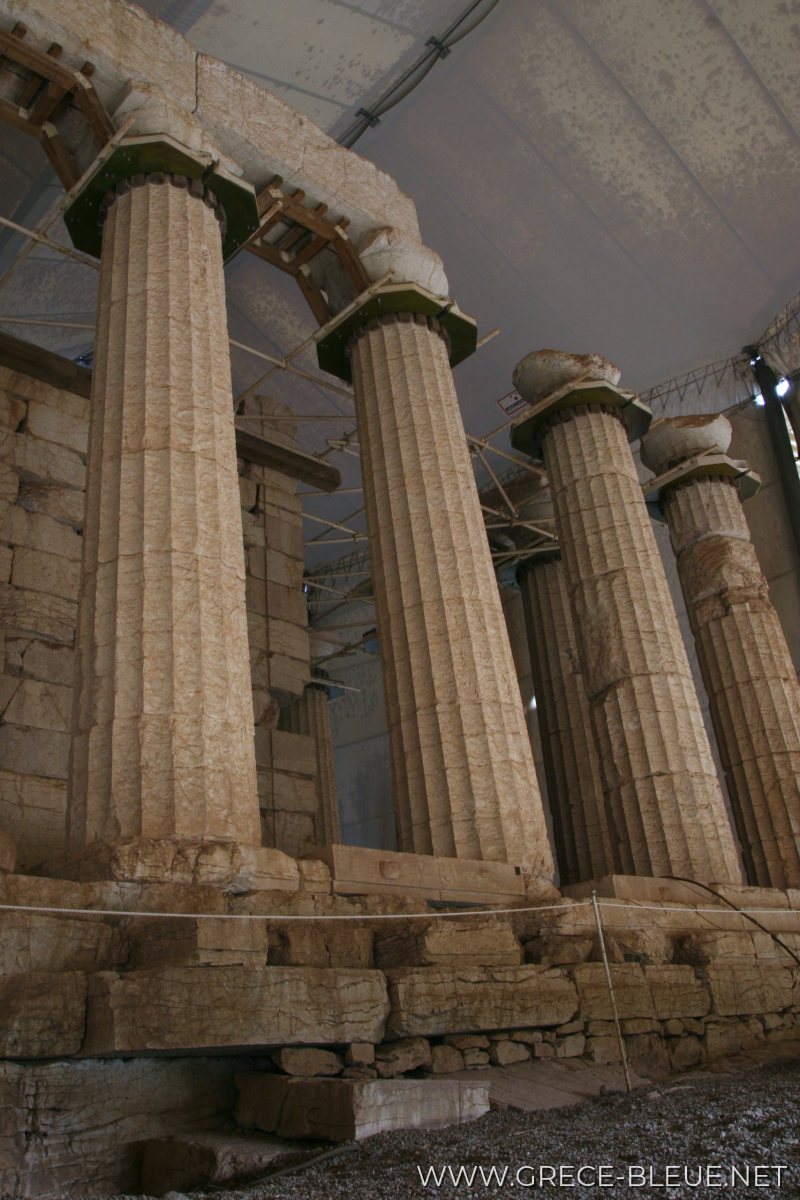
Temple of Apollo Epikourios at Bassae
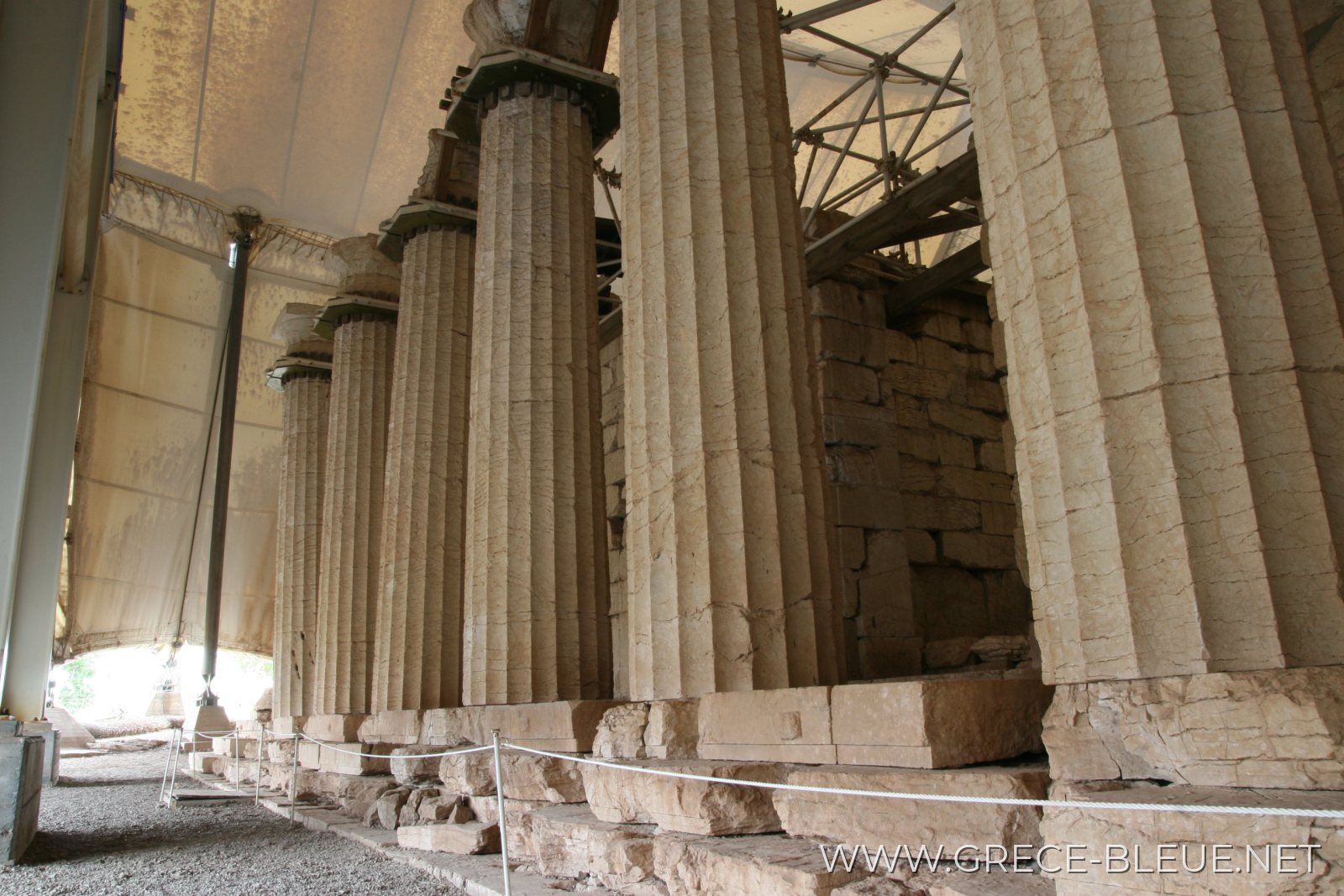
Temple of Apollo Epikourios at Bassae
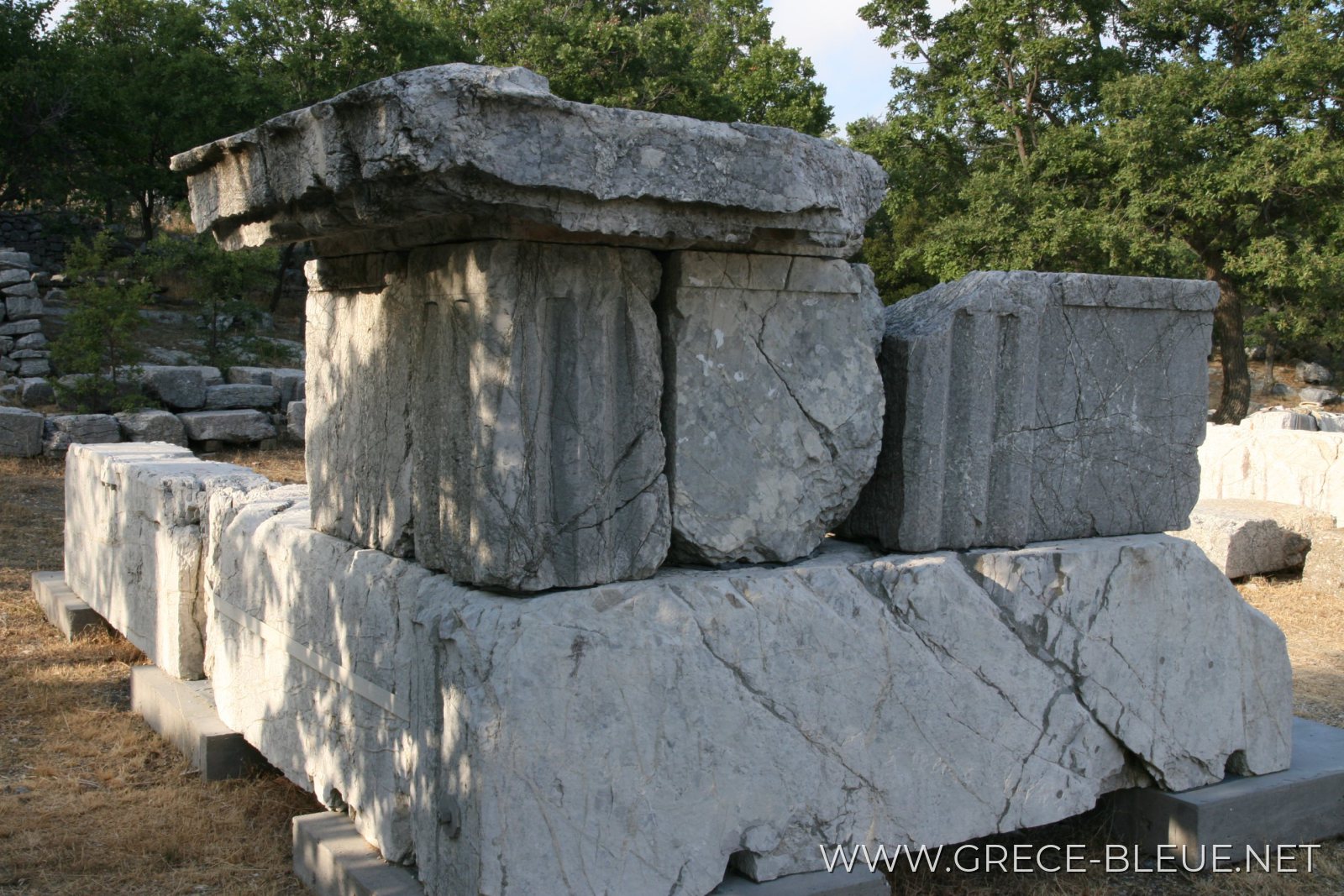
Temple of Apollo Epikourios at Bassae
Neda Gorge and Andritsaina
The visit can be extended with the Neda Gorge★, which stretches at the foot of ancient Phigalia amid cliffs, vegetation and waterfalls. The river, one of the few in Greece to bear a feminine name, was associated with the nymph Neda, nurse of Zeus according to Arcadian tradition.
Near Bassae, the mountain village of Andritsaina is a convenient base for exploring the region. Besides its traditional houses and shaded square, its historic library notably preserves the casts of the Bassae frieze.
Map and route
Near Phigalia and Bassae
Nearby places to stay
On the same theme